
Ridge Vents Explained: Function, Benefits, and Installation Process
Poor attic ventilation can cause countless problems for homeowners - from excessive heat buildup and moisture damage to increased energy bills and premature roof deterioration. These issues often go unnoticed until they cause significant damage, requiring costly repairs. When your attic can’t properly “breathe,” you’re essentially reducing your roof’s lifespan and compromising your home, from its energy efficiency to its roll roofing.
Understanding ventilation options, particularly ridge vent roof systems, is crucial for maintaining your home’s structural integrity and indoor comfort. In this comprehensive guide, we’ll explore how ridge vents function, their significant benefits, and the proper installation process. Let’s help you make an informed decision about the best solution for your home and reduce roof costs.
What Are Ridge Vents and How Do They Work?
The Science Behind Ridge Ventilation
A ridge vent is a specialized ventilation system installed at the peak of your roof, running along the entire ridge. Unlike other vent types that are installed in specific spots, ridge vents provide continuous airflow across the highest point of your attic.
What is the roof ridge vent functionality based on? It works on the principle of natural convection, also known as the “stack effect.” This physics concept explains how:
- Hot air naturally rises to the highest point in your attic
- This hot air escapes through the ridge vent
- As hot air exits, it creates negative pressure
- This pressure pulls in cooler air through intake vents (usually in soffits)
This continuous cycle creates a natural airflow system that requires no electricity or moving parts. The ridge vent roofing system effectively “breathes” with your house, adjusting airflow based on temperature differentials.
Benefits of Installing Ridge Vents
Energy Efficiency and Cost Savings
Proper attic ventilation through ridge vent systems can significantly reduce cooling costs during the summer months. By preventing heat buildup in your attic, your air conditioning system doesn’t have to work as hard to maintain comfortable temperatures. In winter, ridge vents help prevent moisture accumulation that can lead to:
- Mold and mildew growth
- Wood rot in rafters and decking
- Insulation deterioration
- Ice dam formation
Extended Roof Lifespan
One of the most significant benefits of roof ridge vent installation is extending shingle life. Excessive heat trapped in poorly ventilated attics can literally cook your shingles from underneath, leading to:
- Premature shingle aging
- Curling and cracking
- Adhesive failure
- Color fading
- Warranty invalidation (many manufacturers require proper ventilation)
Studies show proper ventilation can extend roof life by up to 20% - a substantial return on your ventilation investment.
Types of Ridge Vents
Baffled vs. Non-Baffled Options
Baffled ridge vent systems include special external weather barriers (baffles) that help prevent wind-driven rain and snow from entering your attic. These baffles also create negative pressure, enhancing airflow efficiency. The baffled ridge vent design is generally recommended for homes in areas with severe weather conditions.
Profile Variations
Low-profile vents for roof ridges are designed to blend seamlessly with your roofline, offering a more aesthetically pleasing appearance. These low-profile systems are often preferred in homes where visual appeal is a priority, as they’re barely noticeable from ground level.
Sizing Considerations
Ridge vent size selection is critical for proper functioning. The standard width is typically 2 inches, but the ridge vent size can vary based on your specific roof construction and ventilation requirements. Most professional roofers calculate the appropriate dimensions based on your attic’s square footage and existing intake ventilation. When selecting a roof vent box for your project, ensure it’s compatible with your specific roofing materials.
Ridge Vents vs. Other Ventilation Options
Box Vents and Roof Vents
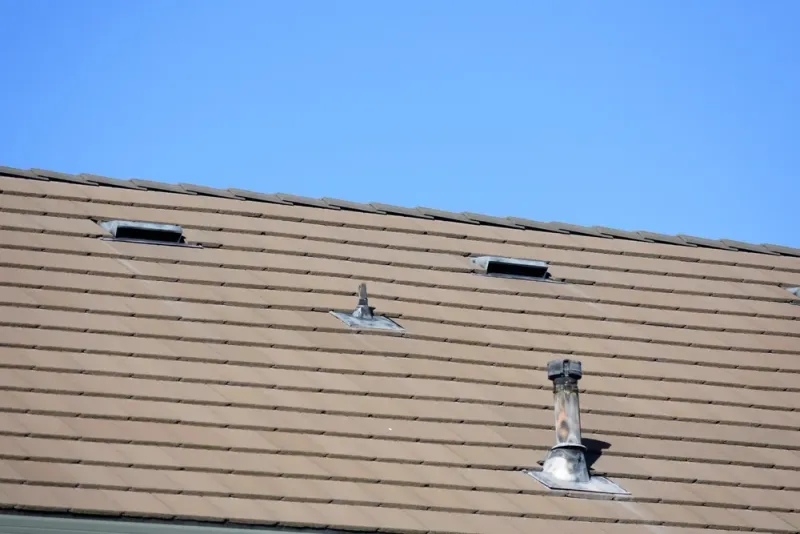
Box vents, also called static vents or turtle vents, are individual units installed near the ridge. While box vents are initially less expensive, they provide significantly less ventilation capacity than continuous ridge vents.
Box roof vents require multiple units spaced across your roof to achieve adequate ventilation. This means more roof penetrations and potential leak points compared to a single ridge vent system. When installing box roof vents, proper spacing and quantity are essential to achieve balanced ventilation.
Off-Ridge and Powered Options
An off-ridge roof vent is installed away from the peak in strategic locations. While these can supplement other ventilation, they don’t capitalize on the natural rising of hot air as effectively as ridge venting.
For homes with complex roof designs, an off-ridge roof vent may be necessary to ventilate areas not served by standard ridge ventilation. A power roof vent uses electricity to forcibly exhaust hot air. While a power roof vent can move large volumes of air, it comes with drawbacks:
- Electricity consumption
- Potential mechanical failure
- Noise issues
- More complicated installation
Power roof ventilators may be necessary for certain situations where natural ventilation is insufficient, but they should be properly sized and installed by professionals. Modern power roof ventilators often include humidity sensors and thermostatic controls for improved efficiency.
Comprehensive Ventilation Approaches
Understanding different roof vent styles helps in selecting the appropriate system. The most effective approach often combines continuous soffit vents with ridge venting. The various roof vent styles available today offer options for almost any architectural design. Various attic roof vent types exist, including:
- Ridge vents
- Soffit vents
- Gable vents
- Turbine vents
- Cupolas
These different types of attic vents each have specific purposes and ideal applications.
Determining Ventilation Needs
Ventilation Calculations
“How many roof vents do I need?” is a common question homeowners ask. The answer depends on your attic size and configuration. Industry standards recommend a minimum of 1 square foot of ventilation for every 300 square feet of attic space, with half at the ridge and half at the soffits.
When determining how many attic vents you need, professionals use calculations based on your attic’s square footage. These calculations help ensure balanced airflow throughout the space. The question should always be answered with proper measurements and airflow calculations.
Ventilation Strategies
Understanding how to ventilate an attic properly requires knowledge of building science. The goal is to create a balanced system where intake (soffit) ventilation equals exhaust (ridge) ventilation. Proper techniques for ventilating an attic vary by region, home design, and existing construction. Some options include:
- Continuous ridge and soffit vents (most effective)
- A combination of various vent types
- Mechanical ventilation for problematic spaces
When considering whether attic fans make a difference, research shows they can be effective supplements in specific situations but may actually disrupt the natural airflow pattern if not properly installed with adequate intake ventilation.
Ridge Vent Installation Process
Preparation and Safety
How to install ridge vents begins with proper preparation:
- Gather all necessary tools and materials
- Choose a clear, calm weather day
- Ensure proper safety equipment (harness, non-slip footwear)
- Clear the work area of debris
Step-by-Step Installation
The process of installing ridge vents includes:
- Remove shingles from the ridge area (typically 6-8 inches on each side)
- Cut a slot along the ridge (approximately 2 inches wide)
- Clean the area of all debris
- Install the vent material along the ridge
- Secure with a proper nailing pattern
- Install cap shingles over the vent
Professional installation ensures proper integration with your roofing system, especially for specialized applications such as snow diverters for metal roofs in snowy climates. Proper placement prevents ice dams and protects ventilation components during heavy snowfall.
Soffit Ventilation Integration
Understanding how to install vents in soffit areas is equally important, as ridge vents require proper intake ventilation to function effectively. This typically involves:
- Measuring and marking soffit vent locations
- Cutting openings in the soffit material
- Installing vent covers or continuous soffit venting
- Ensuring proper insulation clearance for unobstructed airflow
When installing vents in soffit areas, avoid blocking airflow with insulation; use proper baffles to maintain clear ventilation channels.
Ensure Proper Ventilation with Brandon J Roofing
A properly designed and installed ridge vent roof system provides continuous, balanced ventilation that protects your home from moisture damage and excessive heat while extending the life of your roofing materials. By understanding the physics behind roof ventilation and the benefits of ridge vents, you can make informed decisions that will improve your home’s energy efficiency and structural integrity.
Brandon J Roofing brings expert knowledge and professional installation services to ensure your ventilation system functions optimally year-round. Our roofers in St. Louis understand the science behind proper attic ventilation and can recommend the most effective solution for your home design and local climate. Ready to explore your options?