Know Your Roof: Essential Parts of a Roof Frame Explained for Property Owners
Roof problems often go unnoticed until they cause significant damage to your property. Water stains on ceilings, unexplained drafts, or rising energy bills can all indicate issues with your roof’s structural framework. Understanding the parts of a roof frame can help you identify potential problems before they escalate into costly repairs.
In this guide, we’ll explore the essential components that make up your roof’s structure. From the main support system to the smaller elements that complete the framework, knowing these components will empower you to make informed decisions about maintenance, repairs, and renovations. Let’s dive into the anatomy of what protects your home from the elements.
1. Understanding the Roof Frame Basics
The roof frame serves as the skeletal structure that holds your entire roofing system together. The parts of roof construction work in harmony to provide structural integrity while withstanding various weather conditions. Before diving into specific components, it’s important to understand that roof frames can vary depending on your home’s design, age, and regional building practices.
A typical residential roof structure consists of several layers and components that each play a vital role in protecting your home. These parts of roof construction include the main support system (rafters or trusses), connecting elements (ridge board and collar ties), and finishing components (fascia and soffits).
Common Roof Frame Configurations
Roof frames come in various designs, including:
- Gable roofs: The most common design with two sloping sides
- Hip roofs: Four sloped sides that come together at the top
- Mansard roofs: Four-sided design with two slopes on each side
- Flat roofs: Minimal slope design is common in modern architecture
- Gambrel roofs: Barn-style roofs with two different slopes on each side
2. Rafters vs. Trusses: Structural Support Systems Compared
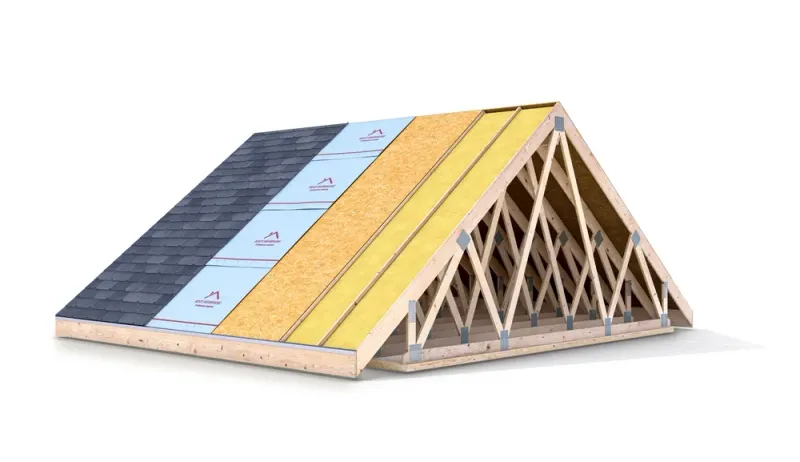
When examining a roof anatomy diagram, you’ll notice that the main support system typically consists of either rafters or trusses. These components form the foundation of your roof’s structure and determine many aspects of its performance and longevity.
Traditional Rafters
Rafters are individual sloped beams that extend from the ridge board (the horizontal beam at the peak) to the exterior walls. They’re typically installed on-site and provide the classic A-frame structure seen in many older homes.
Key characteristics of rafters:
- Allow for more attic space and a potential living area
- Typically constructed from 2×10 or 2×12 lumber
- Offer more design flexibility for custom rooflines
- Generally, more expensive due to higher labor costs
- Require additional support from collar ties and ceiling joists
Engineered Trusses
Trusses are pre-fabricated, triangulated wood structures that span the entire width of your home. These factory-built components have grown increasingly popular in modern construction.
Key characteristics of trusses:
- More economical than rafters for most standard designs
- Engineered for specific load requirements
- Faster installation time
- May limit attic space due to web design
- Cannot be modified on-site without engineering approval
Understanding a proper roof anatomy diagram is essential when planning any renovations that might affect your roof’s structural integrity.
3. The Essential Framework: Ridge Board, Hip, and Valley Rafters
At the peak of your roof lies the ridge board, a horizontal beam that serves as the backbone of the entire structure. When naming parts of a roof, the ridge board is perhaps the most fundamental component, as it serves as the connection point for opposing rafters.
Ridge Board Explained
The ridge board runs along the highest point of your roof, forming the peak where rafters or trusses meet. This crucial component:
- Provides a nailing surface for rafters
- Helps maintain the proper alignment of the roof structure
- Is typically made from 1-inch or 2-inch lumber
- Must be sized appropriately based on roof span and load requirements
Hip and Valley Rafters: Managing Complex Rooflines
For roofs with multiple sections or angles, hip and valley rafters become essential structural elements.
Hip rafters run from the corner of the exterior wall diagonally upward to the ridge board. These components support roof planes that slope in different directions at the home’s external corners.
Valley rafters run diagonally from an inside corner of the exterior wall up to the ridge board, creating the valley where two roof slopes meet. These areas require special attention during roofing as they’re prone to water collection.
Learning the correct names for parts of a roof helps homeowners communicate effectively with contractors during repairs or renovations.
What are Purlins?
What are purlins in roofing? Purlins are horizontal beams that span between rafters or trusses to provide additional support for the roof covering. These structural members:
- Run perpendicular to rafters or parallel to the ridge
- Provide additional support for the roof deck
- Help distribute weight across the roof structure
- They are commonly used in metal roofing systems
Properly installed, purlins can significantly enhance your roof’s load-bearing capacity, particularly in areas with heavy snow or where solar panels might be installed.
4. Decking and Sheathing: The Foundation for Your Roofing Material
Once the main structural components are in place, decking (also called sheathing) comes next. This layer forms the solid surface that supports your roofing materials. When studying parts of a residential roof, decking represents a critical component that bridges the gap between the frame and the outer roofing materials.
Types of Roof Decking Materials
The most common decking materials include:
Plywood: Traditional choice offering good strength and moisture resistance
- Typically 1/2″ to 5/8″ thick
- Available in exterior grades specifically for roofing
- Provides a solid, continuous surface
Oriented Strand Board (OSB): Engineered wood product that has become increasingly popular
- Generally less expensive than plywood
- Manufactured in large sheets with consistent quality
- Less prone to warping than some plywood options
Board Decking: Found in older homes
- Consists of 1×6 or 1×8 boards laid across rafters
- May require additional preparation before modern roofing installation
- Offers character but less uniform support
The quality of your roof’s decking directly affects the performance of your roofing materials and the roof replacement process when that time comes.
5. Secondary Yet Critical Components: Fascia, Soffits, and More
While the main structural elements grab most of the attention, several secondary components play vital roles in completing your roof system. These elements protect vulnerable areas and contribute to your home’s overall appearance and energy efficiency.
What is a Fascia on a Roof?
What is a fascia on a roof? This vertical finishing edge connects to the ends of rafters and trusses. The fascia board:
- Creates a smooth, uniform edge along the roofline
- Supports the bottom row of roofing materials
- Provides mounting for gutters
- Acts as a barrier against weather infiltration at the roof edge
- Contributes significantly to your home’s exterior appearance
Without properly installed fascia, your roof edge would be exposed to water damage and pest infiltration, potentially leading to significant structural issues.
What is the Eave of a Roof?
What is the eave of a roof? The eave refers to the portion of the roof that extends beyond the exterior walls. This overhang includes several important components:
- Soffits: The undersides of the eaves that close off the space between the fascia and the wall
- Vents: Openings in the soffits that allow air circulation in the attic
- Blocking: Wood pieces that fill gaps between rafters at exterior walls
Eaves serve multiple functions, including:
- Protecting exterior walls from water runoff
- Providing shade to reduce heat gain through windows
- Housing ventilation for proper attic airflow
- Adding architectural character to your home
Proper eave construction is essential for both aesthetics and preventing moisture-related problems at the roof edge. Components like roof drip edge installation further protect these vulnerable areas.
6. Why Understanding Your Roof’s Anatomy Matters
Knowledge of the parts of a residential roof provides practical benefits beyond satisfying curiosity. This understanding helps you:
Make Informed Decisions About Repairs and Replacements
When contractors present quotes or discuss problems, knowing roof terminology allows you to:
- Better understand the scope and necessity of the proposed work
- Recognize when something important might be overlooked
- Compare quotes more effectively by understanding what each covers
- Ask more informed questions about materials and methods
For example, understanding the difference between rafters and trusses helps you grasp why certain repairs might be more complex, or why roofing cricket flashing might be recommended for your chimney area.
Identify Problems Earlier
Recognizing early signs of structural issues can save thousands in repair costs:
- Sagging areas might indicate problems with rafters or ridge boards
- Water stains could point to valley rafter or flashing failures
- Rotting fascia might suggest improper drainage
- Excessive energy costs could indicate inadequate roof ventilation
When you know what’s supposed to be there and how it should function, you’re more likely to notice when something isn’t right—before it becomes a major problem.
Communicate Effectively with Professionals
Whether you’re discussing a full roof replacement or exploring options for TPO roofing, speaking the language of roofing professionals:
- Saves time during consultations
- Demonstrates that you’re an informed customer
- Helps ensure you receive accurate information
- May prevent misunderstandings about the work to be performed
This knowledge becomes particularly valuable when selecting materials like GAF or Tamko shingles and understanding how they’ll interact with your roof’s structure.
Talk About Your Roof With Professionals You Can Trust
Understanding the parts of a roof frame is more than just technical knowledge—it’s a practical skill that empowers you to protect one of your most valuable investments. If you want to talk to experts who will explain all your concerns before the job, you’re in the right place.
Brandon J Roofing provides expert service for all aspects of your roof, from addressing structural concerns to installing quality materials that complement your roof’s design. Our team has the experience to work with all parts of a residential roof, ensuring that everything works properly. When problems arise or it’s time for maintenance, our thorough understanding of roof anatomy ensures nothing is overlooked.