Leaky Roof Repair Costs: When to Fix a Leak vs. Full Roof Replacement
Water stains on your ceiling, dripping sounds during rainstorms, and mold growth in your attic are all alarming signs of a leaky roof. These issues don’t just threaten the comfort of your home—they can cause serious structural damage, compromise insulation efficiency, and even pose health hazards when left untreated. But what is the best way to address this?
This comprehensive guide breaks down the real costs associated with roof leak repairs and provides clarity on when to repair versus replace. We’ll explore common leak causes, typical price ranges for different repair scenarios, and practical decision-making tools to help you protect your home and your wallet. By understanding the factors that influence leaky roof repair cost, you’ll be equipped to make informed decisions that prevent further damage and provide lasting solutions.
Common Sources of Roof Leaks
Understanding the origin of your leak is crucial to determining the appropriate repair approach and associated costs.
Damaged or Missing Shingles
When shingles become damaged or go missing due to severe weather or normal aging, your roof’s primary water barrier becomes compromised. Can missing shingles cause a leak? Absolutely—even a single missing shingle creates an entry point for water to penetrate your roof system.
During heavy downpours, water can seep beneath surrounding shingles, causing widespread damage far from the original missing spot. Can missing shingles cause a leak in seemingly unrelated areas of your home? Yes, as water often travels along the roof decking before finding an interior access point.
Roof Flashing and Sealant Issues
Flashing—the thin metal strips installed at roof joints, valleys, and around protrusions—plays a critical role in waterproofing vulnerable areas. It’s essential to address roof flashing and sealant issues promptly, as these components protect your roof’s most leak-prone areas.
Over time, flashing can pull away from surfaces, corrode, or develop holes. Professional roofers know how to properly address roof flashing and sealant issues using industry-best techniques that ensure watertight protection.
Vent Boots and Pipe Penetrations
Any location where something penetrates your roof creates a potential water entry point. Plumbing vents, exhaust fans, and other roof penetrations typically use rubber boots or metal flashing to create watertight seals. When these components deteriorate, they often cause leaks in roof areas that are difficult to detect from the ground. Homeowners frequently notice leaking from roof penetrations as ceiling water stains that align vertically with plumbing fixtures.
Skylights and Chimney Problems
Skylights and chimneys create complex junctions in your roofing system that require specialized flashing and sealing. These areas frequently rank among the top causes of roof leaks in homes with these features. Improper installation or deterioration of sealing materials around these structures are common culprits. Understanding what causes roof leaks in these specialized areas is essential for effective repairs and long-term solutions.
Signs You Have a Leaking Roof
Early detection of roof leaks can save you thousands in repair costs. Here’s how to recognize the warning signs before major damage occurs.
Interior Signs of Roof Damage
The most obvious interior signs of roof damage include water stains on ceilings or walls, often appearing as yellowish or brownish discolorations. You might notice paint bubbling, peeling wallpaper, or damp spots, particularly after rainfall. More severe interior signs of roof damage include sagging ceilings, visible mold growth, musty odors in your attic, or damaged attic insulation. Don’t ignore these warning signals—they indicate active water infiltration that requires immediate attention.
Exterior Tell-Tale Signs
From the ground, look for missing, cracked, or curling shingles. Check your gutters for excessive granule accumulation, which indicates shingle deterioration. If you notice your ceiling leaking during rain, you should do a visual roof inspection (safely from the ground or with binoculars) to identify possible damage points that align with the interior leaks.
Leak Detection Methods
Finding the exact source of a leak can be challenging, as water often enters at one point but travels before becoming visible inside. Start by examining your attic on a sunny day, looking for light penetration or water stains on the underside of the roof deck.
But how to find a roof leak with no attic? The process becomes more investigative and may require professional assistance. Experts use specialized techniques, including moisture meters and infrared technology, that can detect hidden water penetration.
Breaking Down Leaky Roof Repair Costs
When faced with a leaking roof, understanding potential costs helps you budget appropriately and evaluate your options.
Roof Repair Costs for Leaking Roof
The costs of roof repairs for leaking roofs vary significantly based on several factors. Minor repairs typically range from $150 to $400 for issues such as small shingle replacements or minor flashing repairs. More substantial problems involving multiple leaks or structural components can cost $500-$1,500. Complex leaks in difficult-to-access areas might push roof repair costs for leaking roofs to $1,000-$3,000 or more, especially when underlying damage is discovered.
Small Roof Leak Repair Cost
Don’t underestimate the importance of addressing minor leaks quickly. While the small roof leak repair cost might seem insignificant—typically $150-$400 for basic issues like replacing a few shingles or resealing a vent pipe—these small problems can escalate quickly. The small roof leak repair cost is always less than the expense of repairing water damage inside your home, which can run into thousands of dollars for ceiling, insulation, and structural repairs.
Cost Factors That Influence Repairs
Several variables impact your leak in roof repair cost:
- Roof material type (asphalt shingles are typically the least expensive, while metal, tile, or slate repairs cost more)
- Roof pitch and accessibility (steeper roofs require additional safety equipment and time)
- Extent and location of damage (valleys and penetrations are more complex to repair)
- Underlying damage to decking or structure (often not visible until repairs begin)
- Local labor rates and seasonal demand (costs may increase after major storms)
These factors combine to determine your total leak in roof repair cost and should be considered when comparing estimates from different contractors.
DIY vs Professional Repairs
When facing a roof leak, many homeowners debate whether to tackle the repair themselves or hire a professional.
How to Repair a Leaky Roof
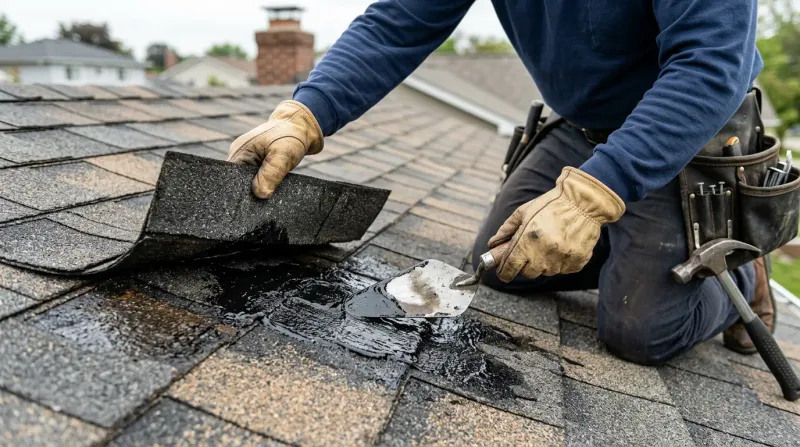
For those with construction skills, understanding how to repair a leaky roof can save money on minor issues. Basic repairs might involve replacing damaged shingles, applying roofing cement around flashings, or resealing around vents.
Learning how to repair a leaky roof requires research and proper safety equipment, including secure ladders, harnesses for steep pitches, and appropriate tools and materials. However, DIY repairs often lack the warranties that professional work provides.
Flat Roof Special Considerations
Flat roofs present unique challenges when they leak. If you’re wondering how to repair a leaking flat roof, the process typically involves locating the leak source, thoroughly cleaning the area, and applying compatible patching materials such as roof cement or specialized membranes.
In emergencies, knowing basic flat-roof repair techniques can minimize interior damage until professionals arrive. A temporary flat roof emergency repair might include using rubber patches or specialized tapes designed for emergency roof repairs.
Who to Call for a Leaky Roof
When the leak is beyond your DIY capabilities, knowing who to call for a leaky roof becomes essential. Licensed roofing contractors have the expertise, tools, and materials to properly diagnose and repair roof leaks. When selecting who to call for a leaky roof, look for contractors with:
- Proper licensing and insurance
- Strong local references and reviews
- Experience with your specific roof type
- Written estimates and workmanship warranties
- Prompt response times, especially for emergencies
Quick Fixes vs. Proper Repairs
Sometimes homeowners need immediate solutions while planning for proper repairs.
Quick Fix for Roof Leak
In emergencies, a quick fix for roof leak problems might involve tarping the affected area, applying roofing cement, or using specialized emergency patch products. These temporary measures can prevent interior water damage until you can book proper repairs. However, a quick fix for roof leaks should never be considered a permanent solution, as it doesn’t address underlying issues and often fails quickly.
How to Fix a Leaking Roof Properly
Understanding how to fix leaking roof problems properly means addressing not just the symptoms but the underlying causes. This includes replacing damaged materials, ensuring proper flashing installation, and verifying that water drainage systems function correctly. Professional roofers know how to fix leaking roof issues comprehensively, preventing recurrence and extending the roof’s lifespan.
Interior Damage Considerations
When dealing with leaks, many homeowners wonder how to fix a roof leak inside where water damage has occurred. This typically involves:
- Drying affected areas completely
- Testing for and treating any mold
- Replacing damaged drywall or ceiling materials
- Repainting affected areas
The repair cost can sometimes exceed the roof repair itself, which is why prompt attention to leaks is crucial. Fixing roof problems early can save significant money on interior repairs.
Repair vs. Replacement: Making the Right Decision
One of the most significant decisions homeowners face is whether to repair a leaking roof or replace it entirely.
When Repairs Are Sufficient
In many cases, fixing leaky roof issues with targeted repairs makes financial sense. This is typically true when:
- Your roof is relatively young (less than 15 years old for asphalt shingles)
- Damage is isolated to a specific area
- The underlying structure remains sound
- There’s no history of recurring leaks
Professional contractors can help assess whether repairing leaky roofs will provide a lasting solution for your specific situation.
Signs You Need a Full Roof Replacement
Sometimes repairs only put a temporary bandage on a larger problem. Consider roof replacement when:
- Your roof is approaching or past its expected lifespan (20+ years for asphalt shingles)
- Multiple leaks occur across different areas
- Previous repairs haven’t resolved ongoing leaks
- More than 30% of the roof shows damage
- You experience roof leaking after heavy rain despite previous repairs
- You’re planning to stay in your home long-term and want optimal protection
Constant roof leaking after heavy rain, even after multiple repair attempts, typically indicates systemic roof failure that only replacement will solve.
Cost Comparison: Repair vs. Replace
When evaluating minor roof leak repair cost against full replacement, consider both immediate expenses and long-term value:
| Consideration | Repair | Replacement |
| Upfront cost | Lower ($150-$1,500) | Higher ($5,000-$25,000+) |
| Solution lifespan | 2-5 years typically | 20-30+ years |
| Energy efficiency | Minimal improvement | Significant improvement possible |
| Home value | Minimal impact | Can increase resale value |
| Warranty | Limited (if any) | Manufacturer + workmanship warranties |
While the initial cost of minor roof leak repairs is lower, multiple repairs over time can exceed replacement costs, providing less protection and peace of mind.
Special Roofing Considerations
Different roof types and specific problems require specialized approaches.
Rolled Roof Repair
For buildings with rolled roofing, understanding rolled roof repair techniques is essential. These repairs typically involve cleaning the damaged area, applying roofing cement, and installing a patch of matching roll roofing material. Professional rolled roof repair ensures proper adhesion and sealing, preventing water from seeping under the patched area. For homeowners considering roofing for 1:12 pitch applications, rolled roofing can be a cost-effective option.
Roofing Problems and Solutions
Common roofing problems and solutions extend beyond simple leaks to include issues like poor ventilation, ice dams, and improper installation. Addressing these underlying roofing problems and solutions is crucial for long-term roof performance. Sometimes, what appears to be a simple leak may actually indicate more complex issues that require comprehensive solutions. For specialized roofing, such as single-ply commercial roofing, different solution approaches may be necessary.
Small Leak Cost Considerations
Understanding small roof leak repair cost per square foot helps homeowners budget appropriately. While most contractors don’t literally charge by the square foot for small repairs, simple repairs typically range from $3 to $10 per square foot of affected area.
The small roof leak repair cost per square foot tends to be higher for small repairs due to minimum service charges and setup costs, making it economically sensible to address multiple small issues simultaneously. When fixing a roof leak, getting multiple issues repaired at once is typically more cost-effective.
What To Do When You Discover a Leak
Immediate action is crucial when you discover water coming through your ceiling.
Immediate Steps
When you notice a leak, knowing what to do can prevent extensive water damage:
- Place buckets or containers to catch dripping water
- Move valuables away from the affected area
- If possible, locate and mark the approximate location of the leak
- Take photos for insurance purposes
- Contact a roofing professional
These initial steps minimize interior damage while you arrange for a professional assessment. If you’ve experienced hail damage to your roof, document this specifically for insurance purposes.
Proper Documentation and Assessment
Before proceeding with repairs, document the damage thoroughly with photos and notes about when the leak was discovered and any related weather events. Many homeowners wonder how to repair a roof that’s suffered weather damage and whether insurance will cover it. Understanding how to repair a roof properly starts with a professional inspection to assess the full extent of damage, which can often reveal hidden issues that go unnoticed by untrained eyes.
Stop The Leaks Today!
Dealing with a leaky roof requires quick action, informed decisions, and quality workmanship. By understanding the factors influencing leaky roof repair cost and carefully weighing repair versus replacement options, you can make financially sound choices that protect your home for years to come. Remember that early intervention typically results in lower repair costs and prevents extensive interior damage that occurs when leaks are ignored or improperly addressed.
Brandon J Roofing stands as a leading provider in the roofing industry, delivering expert diagnostics, transparent pricing, and skilled craftsmanship for all your roof repair and replacement needs. Our experienced team specializes in identifying and resolving the root causes of leaks with lasting solutions tailored to your roof type, home style, and budget. Whether you need a simple repair or are considering a roof shingle visualizer to help choose new materials for a complete replacement, we’re committed to exceptional service and superior results.