Hail Damage Roof Restoration: Navigating Insurance Claims and Expert Repair
Unexpected hailstorms can leave your roof battered and vulnerable, which can be a nightmare for anyone. The sight of damaged shingles, dents, and potential leaks is not enough; you also have to think about repair costs, insurance coverage, and finding qualified contractors, especially during a time when many other homeowners are facing the same challenges.
This guide will walk you through the complete process of hail damage roof restoration from initial damage assessment to working with insurance companies and selecting qualified contractors. You’ll learn how to identify signs of damage, document everything properly for your claim, understand insurance terminology, and make informed decisions about repairs versus replacement. Let’s dive into it!
Immediate Steps After Discovering Hail Damage
When hail strikes your home, taking quick and proper action can make the difference between a smooth restoration process and prolonged structural and leak repairs. The hours and days following a storm are critical.
Document Everything Thoroughly
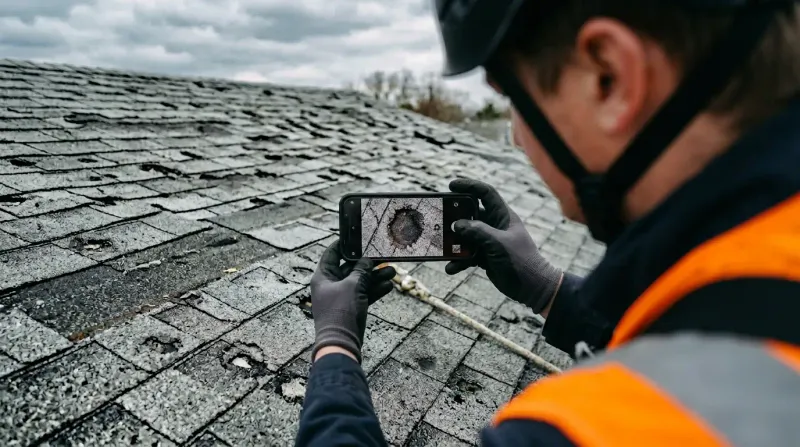
Before doing anything else, document all visible signs of hail damage to your property. Take clear, dated photos from multiple angles, capturing both close-up details and wider shots. This documentation serves as critical evidence for your insurance claim.
- Photograph all sides of the roof (if safely possible)
- Capture images of damaged gutters, downspouts, and flashing
- Document any fallen hail with a ruler for size reference
- Take photos of other property damage (siding, windows, etc.)
- Research the roof replacement costs in your area if necessary
Knowing how to tell if the roof has hail damage is critical during this documentation phase. Look for dents in metal components, displaced granules, and any unusual patterns on your roofing materials.
Request Emergency Temporary Protection
If your roof has significant damage causing leaks, contact a reputable roofing company for emergency tarping or temporary repairs. Most roof repair wind damage services offer emergency solutions that can prevent further interior damage while you work through the insurance and permanent repair process. After severe storms, professional roof repair and wind damage contractors often prioritize homes with active leaks.
Identifying Signs of Hail Damage on Your Roof
Knowing what to look for is essential when assessing hail-damaged shingles and other roofing components. Different roofing materials show damage in distinct ways.
Common Signs of Hail Damage on Asphalt Shingles
The most common roofing material also shows some of the clearest evidence of hail impact:
- Random damage patterns with no obvious directional pattern
- Dark spots where granules have been knocked off
- Soft spots that feel like bruising when pressed gently
- Shiny asphalt where granules are missing
Signs of hail damage on asphalt shingles often appear as circular areas where the granule layer has been compromised, exposing the substrate below.
Impact on Metal Roofing and Other Materials
If you have metal roofing, hail damage presents differently:
- Dents and dings of varying sizes
- Scratches or cracks in the protective coating
- Loosened fasteners or seams
Even quality metal roofing can sustain cosmetic and functional damage from significant hailstorms. Cedar shake, slate, and tile roofing each have their own indicators of damage.
Understanding What Size Hail Causes Damage
Many homeowners wonder, “ What size hail can damage a roof?” while assessing their situation. The answer depends on several factors.
Hail Size and Damage Correlation
Generally speaking:
- Pea-sized hail (¼ inch): Rarely causes significant damage
- Marble-sized hail (½ inch): May damage very old or already compromised roofs
- Quarter-sized hail (1 inch): Often causes damage to asphalt shingles
- Golf ball-sized hail (1¾ inch): Almost always causes notable damage
- Tennis ball-sized hail (2½ inch) or larger: Severe damage likely
Understanding what size hail damages a roof helps homeowners assess the likelihood of damage after a storm. Even with smaller hail, it’s important to check for damage if the storm was particularly intense or long-lasting. Insurance adjusters will often consider what size hail damages a roof when evaluating your claim.
The damage also depends on factors such as wind speed, roof age, and roofing material. Even smaller hail driven by high winds can cause significant damage, particularly to aging roofs.
Navigating the Insurance Claims Process
The insurance claims process often causes the most anxiety for homeowners dealing with hail damage to their roofs in Bloomington and other areas. Understanding this process is essential for a favorable outcome.
Filing Your Claim Correctly
Contact your insurance company promptly, ideally within 24-48 hours. When filing, be prepared with:
- Your policy number
- Date and time of the storm
- Description of damage
- Documentation (photos, videos)
- Information about any emergency temporary repairs
Many policies have time limits for filing claims for storm-damage roof repairs in Madison and other localities, so don’t delay.
Understanding How Roofing Companies Work With Insurance
Professional roofing contractors play a key role in the claims process. How do roofing companies work with insurance companies? The best contractors will:
- Meet with your insurance adjuster during their inspection
- Point out damage the adjuster might miss
- Provide a detailed scope of work and cost estimates
- Help interpret technical aspects of your claim
- Understand insurance terminology and replacement value calculations
Experienced contractors who specialize in hail damage roof restoration know how to effectively communicate with adjusters and advocate for proper coverage of necessary repairs. Understanding how roofing companies work with insurance companies can help you select the right contractor to support your claim process.
Recoverable Depreciation Explained
One confusing aspect of roof insurance claims is depreciation. What is recoverable depreciation on a roof claim? Simply put, it’s the portion of your roof’s value that the insurance company initially withholds but releases after repairs are completed.
For example, if your roof’s replacement cost is $15,000, but it’s depreciated by $3,000 due to age, the insurance company might initially pay $12,000 (minus your deductible). The remaining $3,000 is the recoverable depreciation, which you can claim after providing proof that repairs were completed.
Understanding recoverable depreciation on a roof claim is essential for budgeting your project. Roof insurance depreciation calculations vary by policy, but typically account for the age and expected lifespan of your roofing materials.
Restoration vs. Replacement: Making the Informed Choice
After assessment, you’ll face a critical decision: repair or replace? This choice impacts both short-term costs and long-term home protection.
When Repairs Are Sufficient
Limited or isolated hail damage on roof shingles might be repairable if:
- Damage is confined to one area or slope
- Your roof was relatively new before the damage
- The structural integrity remains intact
- Matching replacement materials are available
Quality repairs for minor hail damage to the roof can restore protection while being more economical than a full replacement. When evaluating a roof damaged by hail, professional contractors look beyond surface damage to determine if the waterproof integrity has been compromised.
When Full Replacement Is Necessary
Complete hail damage roof restoration through replacement becomes necessary when:
- Damage is widespread across multiple sections
- Your roof was already aging (15+ years for asphalt)
- Underlayment or decking is compromised
- Insurance approves full replacement
Remember that whether house insurance covers roof replacement depends on your specific policy terms, the cause of damage, and the roof’s age. Most policies cover hail damage, but coverage may be partial for older roofs.
Severe hail damage on roof shingles that affects multiple areas generally makes replacement more cost-effective than spot repairs. Roof insurance depreciation factors will influence how much your insurer contributes toward this replacement.
Working With Professional Contractors vs. Public Adjusters
Understanding the roles of different professionals can help you navigate the restoration process more effectively.
Roofing Contractors: Your First Line of Support
Qualified roofing contractors provide:
- Free inspections and damage assessments
- Documentation and evidence for claims
- Expert repairs or replacement
- Warranty protection
For many homeowners, a reputable contractor offers sufficient guidance through the process. They can also provide advice on how to tell if the roof has hail damage by conducting thorough professional inspections.
When to Consider a Public Adjuster
Some situations might warrant hiring a public adjuster. What do public adjusters do? They:
- Represent your interests (not the insurance company’s)
- Review and negotiate your claim
- Potentially secure larger settlements for complex claims
- Charge a percentage of your settlement (typically 10-20%)
Understanding what public adjusters do helps you decide if you need this additional representation. Public adjusters can be valuable for complicated or high-value claims.
Cost Considerations Beyond Insurance Coverage
Understanding the financial aspects of roof restoration helps you make better decisions about your project.
Understanding Deductibles and Out-of-Pocket Expenses
Most homeowners must pay their policy deductible before insurance coverage begins. Be wary of contractors who claim to “waive” or “absorb” your deductible—this practice is illegal in many states and unethical everywhere.
Opportunity for Upgrades
A hail damage situation can present an opportunity to consider:
- Impact-resistant shingles (may qualify for insurance discounts)
- Cool roof requirements for energy efficiency
- Improved ventilation systems
- Better underlayment for enhanced protection against leaking roof issues in the future
While insurance typically covers “like-for-like” replacement, many homeowners opt to invest in upgrades for better protection and value. Some insurance companies offer reduced roof insurance depreciation rates for upgraded materials with better impact resistance.
Get Expert Support with Brandon J Roofing
Do you need extra support with hail-damage roof restoration and the complexities of insurance claims? Brandon J Roofing brings extensive experience in guiding homeowners through this process, from initial damage assessment through successful claim resolution and expert repairs. Our team understands the stress and uncertainty that follows storm damage and works to create a smooth, transparent restoration experience.
Whether you’re dealing with minor hail-damaged shingles or comprehensive storm-damage roof repair in Madison, professional guidance makes all the difference in results and peace of mind. Every restoration project deserves attention to detail and quality craftsmanship to protect your home investment. Don’t navigate this challenging process alone! Our experienced professionals are ready to help ensure your home receives the quality restoration it deserves.