Fixing a Leaking Roof: Causes, Temporary Solutions, and When to Call a Professional
Water stains on your ceiling, dripping sounds during rainfall, or puddles on your floor often point to one thing: a roof leak. These issues can quickly escalate from minor nuisances to major structural problems if not addressed promptly. A leaking roof not only damages your home’s interior but can also lead to mold growth, compromised insulation, and even electrical hazards.
In this comprehensive guide, we’ll walk you through the essential steps to fix a leaking roof, both temporarily and permanently. You’ll learn how to identify the source of the leak, implement emergency measures to prevent further damage, and determine when it’s time to call in professional roofing experts. With the right knowledge and tools, you can manage this common challenge.
Immediate Actions for a Leaking Roof
When you discover water coming through your ceiling, your quick response can significantly minimize damage. Here’s what to do right away:
Safety First
- Turn off electricity to affected areas if water is near electrical fixtures
- Place buckets or containers to catch dripping water
- Move furniture and valuables away from the leak
- Use towels to soak up standing water
Document the Damage
- Take clear photos of all visible damage (ceiling stains, puddles, etc.)
- Note when the leak was first noticed and conditions (heavy rain, snow melt, etc.)
- This documentation will be valuable for insurance claims later
Finding the Source of Your Leaking Rooftop
Locating the exact entry point of a roof leak can be challenging because water often travels from the entry point before becoming visible inside.
Attic Inspection
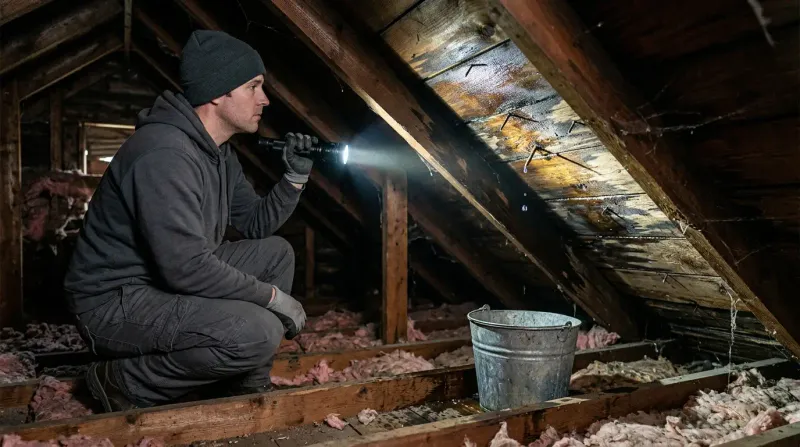
Examining your attic is often the most direct way to identify an attic roof leak. Here’s how to conduct a thorough inspection:
- Wait for daylight hours when light might penetrate through the roof holes
- Use a flashlight to examine the roof sheathing and rafters for water stains, mold, or dampness
- Look for areas where roof nails have pierced through the sheathing and are dripping with condensation
- Follow water trails upward – water runs downhill, so the source will be higher than the visible damage
Exterior Roof Examination
If you can safely access your roof:
- Look for damaged or missing shingles
- Check flashing around chimneys, vents, and roof joints
- Examine roof valleys where debris might collect
- Inspect gutters for proper drainage and possible blockages
Common Causes of a Small Leak in the Roof
Understanding what typically causes roof leaks helps narrow down your search and informs your repair approach.
Damaged or Missing Shingles
Wind, hail, and general aging can compromise your roof’s first line of defense. Regular shingle repair can prevent many leaks before they start. Look for:
- Cracked or curled shingles
- Bare spots where granules have worn away
- Completely missing shingles, exposing the underlayment
Flashing Failures
Flashing—the metal pieces that cover joints in roof construction—often fails before shingles do:
- Check for rust, cracks, or separation in flashing around chimneys and vents
- Look for damaged caulking where flashing meets walls or other roof elements
- Pay special attention to valleys where water naturally concentrates
Roof Vent Issues
Vents that penetrate your roof can create vulnerability:
- Examine rubber boots around pipes for cracks or deterioration
- Check that vent caps are intact and properly sealed
- Look for gaps where vents meet the roof surface
Ice Dams in Winter
Cold climate homes often suffer from:
- Ridges of ice are forming at the roof edges that prevent proper drainage
- Water is backing up under the shingles and entering the home
- Damage to gutters and fascia boards from ice weight
Temporary Solutions for Fixing a Leaking Roof
While waiting for professional repairs, these temporary measures can help minimize damage.
Tarp Installation
For larger damaged areas:
- Obtain a heavy-duty tarp that extends at least 4 feet beyond the leak in all directions
- Remove debris from the roof surface
- Secure the tarp at the peak with 2×4 boards nailed in place (not directly to the roof)
- Extend the tarp over the damaged area
- Secure the bottom and sides with additional boards
- CAUTION: Only attempt if you can safely access your roof and weather conditions permit
Roofing Cement and Patch Application
For a small leak in the roof:
- Clean and dry the affected area
- Apply roofing cement under any lifted shingles or around flashing
- For holes, use a patch of similar roofing material covered with cement
- Press firmly and smooth edges
- For emergency repairs during rain, use a combination of roof cement and a waterproof patch
Caulking for Minor Leaks
Some minor leaks can be temporarily stopped with:
- Silicone or roof-specific caulking is applied to small cracks or gaps
- Focus on areas around flashing, vents, or where different roof materials meet
- Ensure the surface is as clean and dry as possible before application
When to Call a Professional Roofer
While DIY solutions can help in an emergency, certain situations demand professional expertise. Here’s when you should consider calling your local roofing company:
Signs Your Roof Needs Expert Attention
- Multiple or recurring leaks despite attempts at repair
- Large areas of damaged shingles or structural damage
- Water stains that continue to grow after temporary repairs
- Signs of mold or rot in the attic structure
- Your roof is steep or otherwise dangerous to access
- You notice sagging areas in your roof deck
Safety Considerations
Roof work carries significant risks:
- Fall hazards, especially on steep pitches
- Electrical dangers from nearby power lines
- Potential to cause more damage without proper tools and knowledge
- Weather-related risks during emergency repairs
Proper asphalt roof maintenance performed by professionals can prevent many emergencies and is often more cost-effective in the long run.
What to Expect from Professional Roof Repair
Understanding the professional repair process helps you make informed decisions.
The Inspection Process
A thorough professional inspection will include:
- Comprehensive exterior examination of all roofing materials
- Attic inspection for water damage and ventilation issues
- Assessment of nail placement on shingles and other installation factors
- Evaluation of previous repair attempts
- Detailed documentation of all issues found
Repair Options and Considerations
Depending on the extent of damage, professionals may recommend:
- Targeted repairs for isolated issues like individual damaged shingles or flashing
- Section replacement for concentrated damage areas
- Complete roof replacement if damage is extensive or the roof is near the end of its lifespan
- Additional preventive measures, like improved ventilation or gutter guards
For flat or low-slope roofs, specialized techniques like modified bitumen roof repair may be necessary.
Insurance Coverage Questions
Many homeowners wonder about insurance coverage for leaking rooftop repairs:
- Document all damage with photos and detailed notes
- Review your policy for coverage specifics before filing a claim
- Understand that sudden damage (like from storms) is typically covered, while gradual deterioration may not be
- Professional inspection reports can strengthen your insurance claim
Preventing Future Roof Leaks
The best solution to a roof leak is preventing it in the first place.
Regular Maintenance Schedule
Implement a year-round maintenance routine:
- Spring and fall gutter cleaning
- Annual professional inspection
- Prompt removal of debris after storms
- Checking for and addressing hail damage to the roof after severe weather
Early Warning Signs to Watch For
Be vigilant for:
- Granules from shingles in gutters (indicates wearing shingles)
- Curling or buckling shingles are visible from ground level
- Moss or algae growth on roofing materials
- Increased energy bills (may indicate compromised roof insulation from minor leaks)
Take Action Today!
Don’t let water leaks turn your home into a mess! By understanding how to identify, temporarily repair, and properly address roof leaks, you can protect your house from extensive water damage. Remember that while temporary fixes can buy you time, a permanent solution from a trusted professional ensures your home remains safe and dry for years to come.
Brandon J Roofing brings expertise and precision to every roof repair project, from emergency leak fixes to complete roof replacements. Our experienced technicians identify the true source of your attic roof leak and implement lasting solutions that protect your home’s integrity. With our professional approach and quality materials, you can rest assured that your roof will stand strong against the elements.