Wind and Hail Roof Damage: A Homeowner’s Guide to Inspection and Insurance Claims
Severe storms can strike unexpectedly, leaving a trail of destruction, including significant hail and wind damage to roofs. Many property owners don’t realize the extent of damage until leaks appear or more serious problems develop. The aftermath of a powerful storm can be overwhelming, especially when you’re unsure about the condition of your roof or how to proceed with potential repairs.
Understanding how to identify damage and navigate the insurance claims process is crucial for protecting your home and finances. This guide walks you through recognizing common signs of damage, properly documenting it, and successfully working with your insurance company to get the coverage you deserve. Accurately identifying hail-damaged shingles early can prevent minor issues from becoming major headaches that require a complete roof replacement.
Visual Signs of Wind Damage to Your Roof
Wind can be relentless when it comes to attacking your roof’s integrity. Knowing what to look for helps you catch problems early.
Missing or Displaced Shingles
One of the most obvious indicators of wind damage to roof structures is missing shingles. Strong winds can lift and tear away roofing materials, leaving exposed areas vulnerable to water intrusion. Look for:
- Bare spots where shingles should be
- Shingles scattered around your yard after a storm
- Visible dark areas that contrast with the rest of your roof
Lifted or Creased Shingle Tabs
Even if shingles remain attached, wind can damage them, compromising their effectiveness. Inspect for:
- Shingles that appear raised at the edges
- Creased or bent shingles
- Tabs that have folded over themselves
Damaged Flashing and Roof Fixtures
Wind doesn’t just affect shingles. Check these additional areas for damage:
- Loose or missing flashing around chimneys and vents
- Damaged roof vents or turbines
- Loose gutters or downspouts
Taking clear pictures of roof damage after a storm is essential for documenting these issues for insurance purposes.
Identifying Hail Damage on Different Roofing Materials
Hail impacts your roof differently depending on the materials used. Understanding these differences helps with accurate assessment.
Asphalt Shingle Damage
Hail damage to the roof presents specific patterns when it’s made of asphalt, including:
- Random damage with no discernible pattern
- Dark spots where granules have been knocked off
- Soft spots that feel like bruises when touched gently
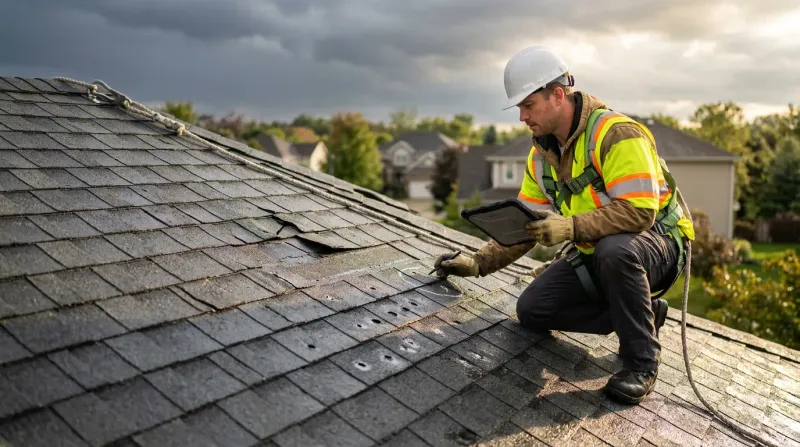
Hail damage to asphalt roof shingles typically appears as circular impressions where the granules have been displaced, exposing the substrate beneath. These damaged areas accelerate aging and significantly shorten your shingles’ lifespan.
Metal and Tile Roof Damage
On other materials, hail leaves different evidence:
- Dents and dings on metal roofing
- Cracks or breaks in clay or concrete tiles
- Damaged ridge caps or roof accessories
The severity of hail shingle damage varies based on:
- Hailstone size
- Wind speed during the storm
- Age and condition of your roof
- The angle at which hail struck your roof
The Inspection Process: DIY vs. Professional Assessment
After a storm, a thorough inspection is your first step toward addressing roof damage.
What You Can Safely Check Yourself
Some damage is visible from ground level or safely accessible areas:
- Check your gutters for shingle granules
- Look for visible damage from windows with second-story views
- Inspect your attic for signs of water intrusion
- Check exterior walls for water stains
When to Call a Professional
Storm damage roofing company insurance expertise becomes invaluable when:
- You’re uncomfortable getting on your roof
- Your roof is steep or multi-story
- You need documentation for insurance claims
- You can’t determine the extent of damage yourself
Professional roofers have the training to safely identify both obvious and subtle signs of damage. Many companies, including Brandon J Roofing, offer free inspections after storms.
Documenting Damage for Insurance Claims
Proper documentation strengthens your position when filing a claim.
Creating a Comprehensive Evidence Package
Insurance companies need proof of damage to process your claim. You should compile:
- Date and time of the storm
- Weather reports confirming hail or high winds in your area
- Pictures of roof damage from multiple angles
- Close-up and wide-shot photos
- Videos showing the extent of damage
- Measurements of hail (if possible)
- Receipts from emergency temporary repairs
Timeline Documentation
Make sure that you keep a tidy record of everything. Create a timeline of:
- When the storm occurred
- When you discovered the damage
- When you contacted your insurance company
- All communications with adjusters and contractors
This timeline is crucial if disputes arise over when damage occurred, especially given the age of the roof and insurance coverage limitations.
Navigating the Insurance Claim Process
Understanding how to work with your insurance provider can significantly affect the outcome of your claim.
Filing Your Initial Claim
Start the process promptly to protect your home. Here’s what you should do:
- Review your policy to understand your coverage
- Contact your insurance company to report the damage
- Ask about specific documentation requirements
- Understand your deductible amount
Working with the Insurance Adjuster
The adjuster’s assessment determines your claim’s value:
- Be present during the inspection
- Have your documentation ready
- Consider having your roofing contractor present
- Ask questions about their findings
- Take notes during the conversation
Many homeowners wonder, “ Will insurance replace an old roof?” The answer depends on your policy details and the cause of damage. Most policies cover damage from sudden events like storms, regardless of roof age, but may provide prorated coverage based on the roof’s age and the insurance policy terms.
Understanding Coverage and Estimates
Insurance settlements for hail damage roof repair costs typically fall into two categories:
- Actual Cash Value (ACV): The replacement cost minus depreciation
- Replacement Cost Value (RCV): The full cost to restore your roof to pre-damage condition
It’s important to understand if your insurance will replace an old roof completely or just cover a portion. Review any settlement offers carefully. If the amount seems insufficient to cover proper repair of roof damage, you can dispute the finding with additional evidence or professional assessments.
Working with Roofing Contractors After a Claim
Choosing the right contractor for hail damage roof repair cost estimation and repair work is crucial.
Selecting a Qualified Contractor
Look for these qualifications when choosing a storm damage roofing company insurance specialist:
- Local reputation and physical office
- Proper licensing and insurance
- Experience with insurance claims
- Manufacturer certifications
- Written warranties on materials and labor
Red Flags to Watch For
Avoid contractors who:
- Demand large upfront payments
- Pressure you to sign contracts immediately
- Offer to “cover” your deductible (which is insurance fraud)
- Have no verifiable references or reviews
The right contractor serves as your advocate throughout the insurance and roof repair process, ensuring quality results that restore your home’s protection.
Preventative Measures for Future Protection
While you can’t control the weather, you can prepare your roof to withstand storms better.
Impact-Resistant Materials
Consider upgrading to:
- Class 4 impact-resistant shingles
- Metal roofing with hail warranties
- TPO for commercial building roofs in storm-prone areas
Investing in quality hail-resistant asphalt roof shingles can provide long-term roof protection for homeowners in storm-prone areas. Many insurance companies offer premium discounts for impact-resistant roofing materials, which can offset the higher **roof-replacement costs**property owners may face.
Regular Maintenance
Proactive care helps your roof withstand severe weather:
- Seasonal inspections
- Prompt repairs of minor issues
- Tree trimming near your home
- Proper attic ventilation
Shield Your Home with Brandon J Roofing
Dealing with hail and wind damage to roof structures can be stressful, but understanding the inspection and claims process can help you protect your home. By knowing what to look for, documenting properly, and working effectively with both insurance companies and contractors, you can navigate the recovery process successfully.
Brandon J Roofing stands ready to help South Florida homeowners through every step of storm damage assessment and restoration. With years of experience handling insurance claims and performing quality repairs, our team provides the expertise you need during challenging times. Don’t let roof damage compromise your home’s safety and value.