Storm Damage: How to Safely Tarp Your Roof After a Disaster
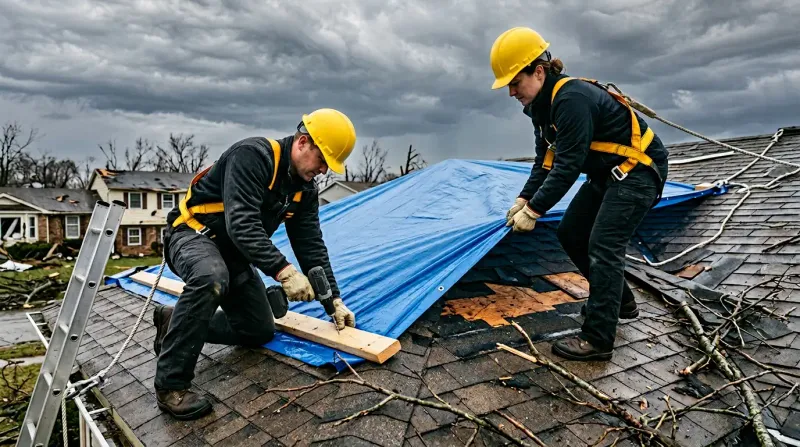
When severe storms strike, roof damage can leave your home vulnerable to water intrusion, causing costly interior damage and creating unsafe living conditions. Torn shingles, fallen tree limbs, and punctured roofing materials all create entry points for water that can quickly deteriorate your home’s structure and damage your belongings. Acting quickly to protect your roof with a temporary tarp is essential while you await professional repairs.
Understanding how to tarp a roof after a storm properly can make the difference between minor and catastrophic damage. This guide provides step-by-step instructions for emergency roof protection that can save you thousands in additional repair costs. We’ll cover safety precautions, materials needed, and proper installation techniques to help you protect your home during this stressful time.
Safety First: When Not to Tarp Your Roof
Before attempting any emergency roof repairs, you must prioritize your personal safety above all else.
Dangerous Conditions to Avoid
- During active storms or when lightning is present
- High winds (above 30 mph)
- Severe structural damage that compromises roof stability
- After dark or in poor visibility conditions
- If you’re uncomfortable with heights or lack proper equipment
- When another storm is imminent in the forecast
Essential Safety Equipment
- Non-slip footwear with rubber soles
- Heavy work gloves for protection and grip
- Safety harness, if available
- Hard hat to protect against falling debris
- Safety glasses
- Ladder in good condition with stabilizers
- A partner to assist and spot you
Remember that emergency tarping done incorrectly can create additional hazards. If you’re unsure, you can safely complete this task or contact professionals immediately to avoid injury.
Essential Materials for Emergency Roof Tarping
Having the right supplies is crucial for effective temporary protection:
Tarp Selection
- Heavy-duty polyethylene tarp (at least 6 mil thickness)
- UV-resistant material for longer protection
- Size that extends at least 4 feet beyond the damaged area on all sides
- Reinforced edges and grommets for secure attachment
- Blue tarps are standard, but any heavy-duty color works
Tools and Fasteners
- 2×4 lumber (8-10 foot lengths)
- 3-inch deck screws or 1-inch roofing nails
- Hammer or battery-powered drill
- Utility knife
- Tape measure
- Rope (optional for additional securing)
- Sandbags (optional for additional weight)
Store these materials in an accessible location during storm season so you’re prepared for emergency tarping when needed. Having supplies ready can save precious time when your roof is compromised.
Step-by-Step Guide to Secure Your Roof with a Tarp
Preparing Your Roof for Tarping
- Visually assess damage from the ground first
- Remove loose debris from the roof when safe
- Measure the damaged area plus at least 4 feet extra on all sides
- Cut 2×4s to appropriate lengths for securing the tarp
- Unroll the tarp on the ground to remove creases
Always work with a partner and avoid walking directly on damaged sections of the roof that may not support your weight.
Proper Tarp Placement Techniques
- Position the tarp to cover the entire damaged area
- Start at the roof peak and extend down past the eaves
- The tarp should cover at least 4 feet beyond the damage in all directions
- For large areas, overlap multiple tarps by at least 8 inches
- Ensure the tarp layout directs water off the roof rather than creating pooling
Proper alignment at the beginning saves trouble later. Take time to position the tarp correctly before securing it.
Securing the Perimeter to Prevent Wind Lift
- Roll one edge of the tarp around a 2×4 board (creating a “tarp sandwich”)
- Secure this wrapped board at the peak of the roof
- Stretch the tarp down toward the eaves, keeping it tight
- Secure the bottom edge with another wrapped 2×4
- Add additional wrapped 2×4s along the sides and middle sections
- Fasten boards with screws or nails every 8-12 inches
- Pay special attention to corners, as they’re vulnerable to wind lift
When done correctly, tarping a roof after a storm results in a drum-tight covering with no loose sections that could flap in the wind or collect water.
Addressing Specific Roof Features
Capping a Chimney During Emergency Tarping
Chimneys require special attention during tarping:
- For chimneys within the damaged area, cut a precise hole in the tarp
- Make an X-shaped cut slightly smaller than the chimney dimensions
- Carefully work the tarp around the chimney
- Create a rain collar by capping a chimney with a separate piece of tarp
- Secure the collar with an adjustable metal band or zip ties
- Seal edges with roofing cement or silicone caulk
Never completely cover chimney openings, as this creates carbon monoxide hazards if the fireplace or heating system is used. Proper capping chimney techniques maintain weather protection while ensuring safe ventilation.
Dealing with a Roof Split Boot
A roof split boot refers to the rubber seal around plumbing vents that commonly sustains damage during storms:
- Identify any roof split boot before completing your tarping
- For minor splits, apply roofing cement as a temporary measure
- For major damage, position your tarp to cover the vent pipe area
- Cut a small X in the tarp where the pipe needs to protrude
- Create a collar that fits snugly around the pipe
- Seal edges with roofing cement or silicone caulk
- Secure with a zip tie or hose clamp for extra protection
Properly addressing these roof penetrations prevents water intrusion at these vulnerable points.
Common Mistakes to Avoid When Tarping Your Roof
Even well-intentioned homeowners often make these preventable errors:
Material Mistakes
- Using lightweight tarps not designed for outdoor exposure
- Selecting tarps that are too small to provide adequate coverage and overlap
- Using inappropriate fasteners that pull out easily
- Relying on bricks or rocks instead of properly securing the tarp
- Using interior-grade materials that quickly deteriorate in sunlight
Installation Errors
- Failing to wrap tarp edges around wood strips
- Creating improper water flow patterns that direct water under the tarp
- Not creating enough tension (allowing water to pool)
- Puncturing the middle of the tarp with fasteners
- Inadequate securing at edges and corners
Safety Oversights
- Working alone without a spotter
- Attempting repairs in unsafe weather conditions
- Not using proper safety equipment
- Walking directly on damaged sections
- Underestimating the complexity and danger of the job
Remember that a tarp is a temporary solution, typically lasting 30-90 days depending on weather conditions and installation quality. Don’t delay in arranging professional roof shingles repair after securing your temporary protection.
When to Call the Professionals
While emergency tarping can be a DIY project in some situations, certain circumstances warrant immediate professional assistance:
- Steep roofs (greater than 6/12 pitch)
- Extensive damage covering large areas
- Structural damage that makes the roof unsafe
- Multiple-story homes
- Complex roof designs with numerous features
- If you lack the necessary equipment or physical ability
- When electrical hazards exist (downed power lines nearby)
Professional roofers have specialized equipment and expertise to safely secure even severely damaged roofs. They can also perform a thorough inspection to identify all damaged areas that might not be obvious to untrained eyes. The architectural shingles’ lifespan can be significantly impacted by storm damage if not properly addressed, making professional intervention important for long-term roof health.
Beyond Tarping: Additional Considerations
While securing a tarp addresses the immediate concern of water infiltration, there are other important considerations:
- Document all damage with photos for insurance purposes
- Contact your insurance company promptly to start the claims process
- Consider damage to siding and gutters, which may also need attention
- Look for signs of interior water damage that may require mitigation
- Monitor the tarp regularly, especially after subsequent wind events
- Understand the proper installation process for permanent repairs
The sooner you can arrange permanent repairs, the better protected your home will be. Temporary tarps are just that—temporary.
Shield Your Home Against The Storm
When storms strike and your roof is compromised, implementing emergency protective measures can prevent thousands of dollars in additional damage to your home’s interior and structure. Understanding the proper techniques for tarping your roof is an essential skill that can protect your property while you arrange for professional repairs. Always prioritize safety first—no home repair is worth risking personal injury.
Brandon J Roofing specializes in both emergency tarping services and permanent storm damage repairs throughout the Miami area. Our experienced team can quickly assess damage, properly secure your roof, and provide lasting solutions that restore your home’s protection and your peace of mind. The roof replacement cost Miami homeowners face after storm damage depends significantly on how quickly and effectively temporary protection measures are implemented.