Protect Your Roof: Types, Benefits, and Installation of Snow Guards
Winter brings beautiful snow-covered landscapes, but it also creates significant hazards for homeowners with sloped roofs. When snow accumulates and suddenly slides off, it can damage gutters, destroy landscaping, crush cars, and even injure people walking below. This sudden avalanche effect is particularly common with smooth surfaces like roofing snow guards are designed to prevent.
The risks are even greater with certain roofing materials that have slick surfaces. Metal, slate, and even some asphalt shingle roofs can release dangerous amounts of snow and ice without warning. In this comprehensive guide, we’ll explore how these simple devices work, the different types available, proper installation methods, and how they can save you from costly property damage and potential liability issues.
Why Snow Guards Are Necessary
The Physics of Snow Slides
Snow accumulation on your roof might seem harmless at first, but as temperatures fluctuate, a dangerous situation develops. When the roof surface warms slightly (either from sunlight or heat escaping from your home), a thin layer of ice melts at the roof surface, creating a slippery condition. Once this happens, the entire snow mass can suddenly break free.
Snow sliding off metal roofs is particularly problematic. Metal roofing’s smooth surface offers virtually no friction to hold snow in place. A typical metal roof can release hundreds of pounds of snow in seconds, creating a dangerous avalanche effect. Even worse, this often happens without warning on sunny days after a snowstorm when people might be outside.
The Dangers of Uncontrolled Snow Slides
The risks associated with uncontrolled snow slides include:
- Damaged gutters and downspouts
- Crushed landscaping and outdoor fixtures
- Dented vehicles
- Blocked entrances and exits
- Personal injury to people below
- Potential liability issues for homeowners
This is why snow sliding off metal roof scenarios must be prevented through proper snow management solutions. The cost of installing snow retention systems is minimal compared to the potential damage they prevent.
Types of Snow Guard Systems
Pad-Style Snow Guards
Pad-style guards are small, individual units typically made of metal or polycarbonate that are attached to the roof surface. They work by:
- Creating friction points that hold snow in place
- Allowing gradual melting rather than sudden slides
- Providing an economical solution for many residential roofs
These roof guards are most effective when installed in a staggered pattern across the roof surface. They’re less visually obtrusive than other systems, making them popular for homeowners concerned about aesthetics.
The cost for pad-style snow retention units typically ranges from $4 to $ 10 per unit, with the average home requiring 100 to 200 units, depending on roof size and snow load calculations.
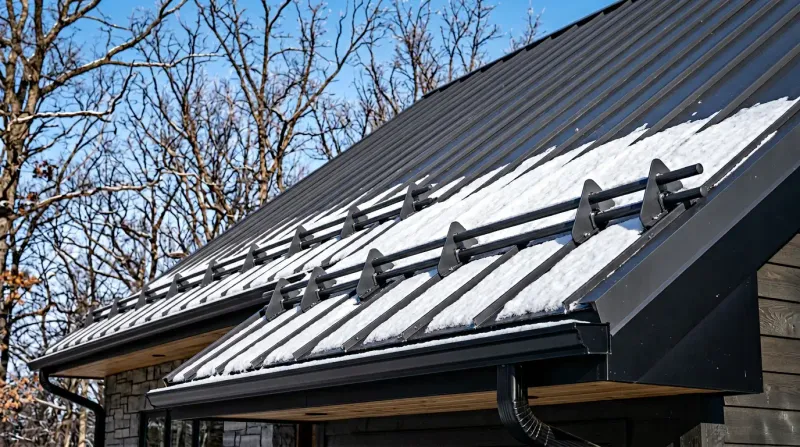
Pipe-Style Snow Guards
Pipe systems consist of one or more horizontal pipes mounted several inches above the roof surface on brackets. Their benefits include:
- Superior strength for heavy snow loads
- Multiple rows for increased retention capability
- Excellent performance on steep-pitched roofs
Ice guards for metal roofs often utilize pipe systems because they provide substantial holding power even in the most challenging conditions. They’re particularly effective for commercial buildings or homes in areas with extreme snowfall. The initial investment for pipe-style ice guards for metal roofs is higher, typically $10-20 per linear foot installed, but they offer enhanced protection and durability.
Fence-Style Snow Guards
Fence-style systems are the most robust option, featuring multiple horizontal bars arranged in a fence-like configuration. These systems:
- Provide maximum snow retention
- Work well for high snow-load regions
- Often feature architectural designs for visual appeal
These comprehensive roofing snow guards are typically recommended for commercial applications or residential roofs in areas with extreme snowfall. While more visually prominent, many manufacturers offer designs that complement various architectural styles. Fence systems represent the highest investment at $15-30 per linear foot installed, but offer the greatest level of protection against snow slides.
Proper Installation Techniques
Strategic Placement
Proper installation begins with strategic placement. Snow guards must be:
- Installed across the entire eave edge (not just in valleys or problem areas)
- Extended high enough up the roof to support the entire snow mass
- Placed in patterns that distribute the snow load evenly
For proper snow retention systems, guards typically need to be placed in multiple rows, with the specific pattern determined by roof pitch, length, and local snow load requirements.
Material Compatibility
One critical aspect of installation is ensuring compatibility between the snow guard and your roofing material:
- Metal roofs require guards specifically designed for metal panels
- Guards must attach without compromising weatherproofing
- Attachment methods vary by roof type (exposed fastener vs. standing seam)
For proper snow retention on metal roofing, it’s essential to use systems designed specifically for your metal panel profile to prevent leaks and ensure secure attachment.
Common Installation Mistakes to Avoid
Even well-intentioned DIY installations can lead to problems:
- Inadequate quantity of guards for the snow load
- Improper spacing that allows snow to slide between guards
- Attachment methods that void roofing warranties
- Using guards not rated for local snow loads
Professional installation ensures your snow management system will function properly when you need it most. Experienced contractors calculate the proper number, placement, and attachment method based on engineering principles rather than guesswork.
Maintenance and Lifespan
Routine Inspection
Snow guards should be inspected:
- Before winter begins
- After major snow events
- In spring, as part of regularroofing maintenance tips for all seasons
Look for loose fasteners, bent components, or signs of excessive stress on the system.
Expected Lifespan
The longevity of your snow retention system depends on several factors:
- Quality of materials (aluminum, copper, or steel)
- Professional installation
- Local climate conditions
- Roof type and pitch
Quality roof guards installed by professionals typically last 20-30 years, often matching the lifespan of the roof itself. Higher-end materials like copper or stainless steel can last even longer.
When Replacement Is Necessary
Snow guards should be replaced when:
- Components show visible damage or deformation
- Fasteners have worked loose and cannot be secured
- The system has failed to hold back the snow effectively
- The roof is being replaced (guards should typically be replaced at the same time)
Choosing the Right Snow Guard System
Factors to Consider
Selecting the appropriate system means evaluating:
- Roof material (metal roofing vs. asphalt shingles vs. slate)
- Local snow load requirements
- Roof pitch (minimum slope for metal roof considerations)
- Aesthetic preferences
- Budget constraints
For homes withcorrugated metal roofing, specialized guards that accommodate the panel profile are necessary.
Professional Assessment Value
Professional roofers like Brandon J Roofing offer:
- Site-specific snow load calculations
- Recommendations tailored to your specific roof
- Knowledge of local building codes
- Expert installation that preserves roofing warranties
A professional assessment ensures you get the right system for your specific conditions rather than a one-size-fits-all approach.
A Weather Safe Roof, Season After Season
Snow guards are an essential safety feature for homes in snowy climates, particularly those with metal, slate, or other smooth-surfaced roofing materials. These simple devices prevent dangerous snow slides that can damage property, destroy landscaping, and even cause personal injury. With proper selection, installation, and maintenance, snow guards provide peace of mind throughout the winter months.
Brandon J Roofing specializes in comprehensive roofing solutions, including professional snow guard installation that protects your property and everyone around it. Our team understands the challenges of winter roof management and can recommend the right snow retention system for your home. Don’t wait for a dangerous snow slide to damage your property or injure someone – proper planning prevents these incidents entirely.