Reduce Noise and Save Energy: How to Insulate Your Metal Roof Effectively
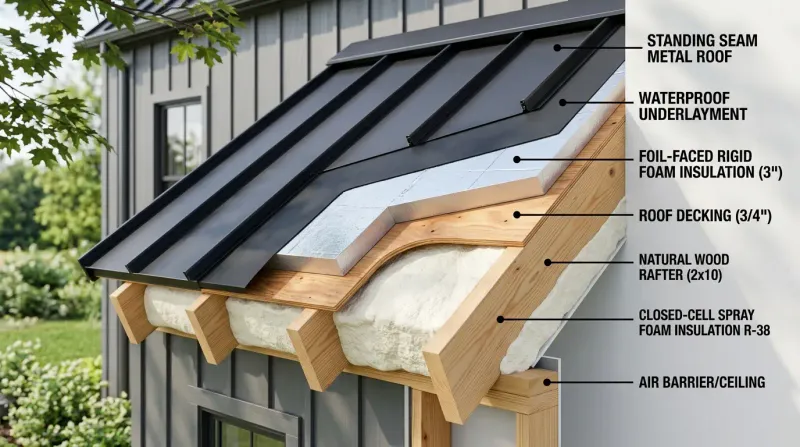
Metal roofs offer exceptional durability and longevity, but without proper insulation, they can create significant problems for homeowners. Condensation forming under your roof can lead to rust, mold, and structural damage. Excessive heat transfer makes your HVAC system work overtime, driving up energy bills. And the thunderous noise during rainstorms disrupts your peace and comfort in your own home.
Learning how to insulate a metal roof properly addresses these issues while significantly improving your home’s energy efficiency. The right insulation solution reduces noise, prevents condensation, and creates a more comfortable indoor environment year-round. In this guide, we’ll explore the most effective insulation methods, materials, and installation techniques to help you maximize the benefits of your metal roofing foam and your metal roofing system.
Why Metal Roofs Need Proper Insulation
The Condensation Challenge
One of the biggest problems with uninsulated metal roofs is condensation. When warm, moisture-laden air inside your home meets the cold metal surface, water droplets form. This “sweating” leads to several issues:
- Rust and corrosion on metal components
- Water damage to ceiling materials
- Mold and mildew growth
- Decreased insulation effectiveness
A properly installed metal roof with insulation creates a thermal barrier that keeps the metal surface closer to indoor temperatures, significantly reducing condensation risk.
Heat Transfer Problems
Metal conducts heat efficiently—too efficiently for comfort:
- In summer: Uninsulated metal roofs can reach temperatures of 150°F or higher, radiating heat into your living space
- In winter: Heat escapes rapidly through metal, increasing heating costs
Insulation under steel roof systems prevents excessive heat transfer, making your home more comfortable and energy-efficient year-round.
The Noise Factor
The drumming sound of rain or hail on a metal roof can be deafening without proper sound insulation. A well-designed metal roof with an insulation system can reduce this noise by up to 95%, creating a quieter, more peaceful home environment during storms.
Essential Insulation Options for Metal Roofs
Spray Foam Insulation
Spray foam insulation for metal buildings comes in two primary types: open-cell and closed-cell. The popularity of spray foam insulation for metal buildings continues to grow due to its versatility and performance.
Closed-Cell Spray Foam
Spray foam insulation on metal roof surfaces delivers exceptional performance with these advantages:
- Highest R-value per inch (R-6 to R-7)
- Creates an air and moisture barrier
- Adds structural strength
- Conforms perfectly to irregular surfaces
This option is ideal for areas with extreme temperatures or high humidity. Closed-cell spray foam provides superior insulation and moisture control in a single application. Applying spray foam insulation on metal roof structures also helps eliminate thermal bridging.
Open-Cell Spray Foam
Though less dense than closed-cell foam, open-cell foam offers:
- Good sound-dampening properties
- Lower cost than closed-cell
- R-value of approximately R-3.5 per inch
- Better flexibility with building movement
Spray foam insulation for steel buildings is an excellent all-in-one solution that addresses thermal, moisture, and acoustic concerns simultaneously. Many contractors recommend spray foam insulation for steel buildings as the most comprehensive solution.
Rigid Board Insulation
Standing seam metal roof over rigid insulation creates a highly efficient system with these benefits:
- Consistent R-value throughout
- Can be installed above or below the roof deck
- Excellent compressive strength
- Available in various thicknesses to meet specific R-value requirements
Polyisocyanurate (polyiso), extruded polystyrene (XPS), and expanded polystyrene (EPS) are common rigid board options. Foamular insulation is a popular XPS product that delivers excellent performance for standing seam metal roof over rigid insulation applications.
Batt and Blanket Insulation
Fiberglass or mineral wool batts provide:
- Cost-effective insulation
- Easy installation between purlins
- R-values are typically between R-11 and R-30, depending on thickness
- Good sound absorption properties
Reflective and Bubble Insulation
Bubble insulation for metal buildings consists of reflective foil layers with bubble material between them:
- Reflects up to 97% of radiant heat
- Thin profile (typically ¼-inch thick)
- Easy installation
- Doubles as a vapor barrier
While it has a lower R-value than other options, metal roofing with insulation foam that includes reflective properties is excellent for hot climates where heat reflection is most beneficial. Many bubble insulation for metal buildings products are designed for quick DIY installation.
Installation Methods: Inside vs. Outside
How to Insulate a Metal Roof from the Inside
Interior insulation is the most common approach:
- Install a vapor barrier if using permeable insulation
- Secure insulation between purlins or rafters
- Cover with interior finishing materials if desired
This method works well for:
- New construction
- Buildings with roof access from below
- Tin shed insulation projects
- Spaces where interior height isn’t a critical concern
Understanding how to insulate metal roof structures from the inside is essential for managing condensation issues in existing buildings. Proper insulation for metal building walls should be coordinated with your roof insulation strategy for best results.
How to Insulate a Metal Roof from the Outside
How to insulate a metal roof from the outside is particularly relevant for retrofits or when replacing an existing roof:
- Remove existing metal panels
- Install rigid insulation board over the roof deck
- Add a moisture barrier
- Install new metal roofing over the insulation
This approach:
- Minimizes disruption to interior spaces
- Provides opportunity to upgrade roofing materials
- Creates continuous insulation without thermal bridges
- Is ideal for industrial roof insulation projects
Vapor Barriers and Ventilation: Critical Components
Understanding Moisture Control
Controlling moisture is as important as controlling temperature. Without proper vapor management:
- Condensation forms within insulation, reducing effectiveness
- Mold and mildew develop in hidden spaces
- Structural components can rot or corrode
- Insulation can become waterlogged and ineffective
A properly installed vapor barrier on the warm side of the insulation prevents warm, moist air from reaching cold surfaces where condensation can occur. Proper insulation under steel roof systems must include moisture management strategies.
Proper Ventilation Systems
Even with excellent insulation for metal building walls and roofs, ventilation remains essential:
- Ridge vents allow hot, moist air to escape
- Soffit vents permit fresh air intake
- Proper airflow prevents moisture accumulation
- Mechanical ventilation may be necessary for some applications
The goal is to maintain a dry, temperature-controlled space between your living area and the metal roof. This is especially important for tin shed insulation, where temperature fluctuations can be extreme.
Cost Analysis and Return on Investment
USA Insulation Cost Considerations
USA insulation cost varies widely depending on:
- Insulation type and R-value
- Building size and complexity
- Regional labor costs
- Access challenges
- Additional components (vapor barriers, ventilation)
Typical cost ranges per square foot:
- Spray foam: $1.50-$5.00
- Rigid board: $1.25-$3.00
- Fiberglass batts: $0.75-$2.00
- Reflective/bubble: $0.50-$1.25
Getting multiple quotes is essential for determining an accurate USA insulation cost for your specific project.
Long-Term Energy Savings
Though initial costs may seem high, properly installed metal roofing foam insulation delivers significant returns:
- 15-25% reduction in heating and cooling costs
- Extended HVAC equipment life
- Potential eligibility for energy efficiency tax credits
- Enhanced comfort reducing supplemental heating/cooling needs
Most quality insulation projects pay for themselves within 3-7 years through energy savings alone. When considering metal roofing with insulation foam, factor in these long-term benefits.
Additional Benefits Beyond Energy Savings
The full value of proper metal roof insulation extends beyond energy bills:
- Noise reduction creates a more peaceful living environment
- Condensation control protects structural elements and prevents mold
- Temperature stability improves comfort throughout the home
- Potential increase in property value
The benefits of attic insulation extend to every aspect of home comfort and building longevity. In commercial applications, industrial roof insulation significantly improves workplace comfort and operational efficiency.
Protect Your Home with Brandon J Roofing
A properly insulated metal roof transforms an energy-inefficient, noisy covering into a high-performance building system. By choosing the right insulation materials and installation methods for your specific needs, you can dramatically reduce energy costs while creating a more comfortable, quieter living environment. Brandon J Roofing provides comprehensive metal roofing services that include expert insulation solutions tailored to your specific climate and building requirements.
Don’t settle for the discomfort and high energy bills that come with an uninsulated metal roof. Whether you’re building new, replacing an old roof, or looking to improve your existing metal roof’s performance, we offer proper insulation and long-term value.