Is It Time? 7 Critical Signs Your Residential Roof Needs Replacement
Your roof silently protects your home from the elements day after day, but it won’t last forever. Many homeowners miss the early warning signs of roof failure, leading to costly interior damage, structural issues, and emergency repairs. Understanding when you need a new roof can save you thousands of dollars and prevent the headache of unexpected leaks or collapses.
So how do you know if you need a new roof? The signs can be subtle at first—a few granules in your gutter, a slight discoloration on your ceiling, or shingles that don’t look quite right. This guide will walk you through the seven critical indicators that it’s time for an asphalt or metal roof replacement, helping you protect your home before small problems become major catastrophes.
Sign #1: Your Roof Has Reached Its Age Limit
Age is often the most reliable indicator that roof replacement is on the horizon. Most roofing materials have a predictable lifespan, and pushing beyond that timeline invites trouble.
The Lifespan of Common Roofing Materials
How long does a shingle last? It depends on the type you have installed:
- Asphalt shingles: 15-30 years
- Wood shakes: 20-40 years
- Metal roofing: 40-70 years
- Clay/concrete tiles: 50+ years
If your asphalt roof is approaching 20 years, it’s wise to start planning for replacement, even if it looks okay from the ground. The protective qualities deteriorate over time, even when visible damage isn’t apparent. Once you’ve reached 80-90% of your roof’s expected lifespan, having regular professional inspections becomes essential.
How long shingles last is also affected by your local climate. In areas with extreme weather, such as Cumming, GA, where hot summers and occasional storms are common, roofs often reach the end of their functional life sooner than the manufacturer’s estimates.
Sign #2: Your Shingles Are Visibly Damaged
Damaged shingles are clear indicators that your roof’s health is compromised and may need replacement.
Types of Shingle Damage to Look For
Pictures of wind damage to shingles typically show:
- Curling or clawing edges
- Buckling in the middle
- Cracked or broken sections
- Completely missing shingles
When examining your roof, pay special attention to the edges and areas around chimneys or vents where wind can get underneath and lift shingles. After strong storms, it’s wise to use binoculars for a safe inspection from the ground.
Pictures of wind damage to shingles often reveal patterns of damage in lines or concentrated areas where wind forces were strongest. If you notice several damaged areas across your roof rather than just a few isolated spots, this suggests that comprehensive roof replacement might be more cost-effective than repeated repairs.
The Repair vs. Replace Decision
Roof repair for missing shingles may be sufficient if:
- The damage is limited to a small area
- Your roof is relatively new (less than 10 years old)
- The shingles were properly installed initially
- You still have matching replacement shingles
However, roof repair becomes less practical when the damage is widespread or recurring. Multiple repair patches can create vulnerable seams and compromise your roof’s watertight integrity. If more than 30% of your roof shows damage, replacement is typically the more economical long-term solution.
Sign #3: You’re Finding Granules in Your Gutters
Asphalt shingles are coated with granules that protect them from UV rays and improve fire resistance. When these granules start shedding excessively, it’s a sign your roof is deteriorating.
Understanding Granule Loss
Granular loss on a roof is normal in three scenarios:
- Immediately after installation (excess granules)
- After severe weather events
- As the roof nears the end of its lifespan
However, heavy or continuous granular loss on a roof indicates your shingles are wearing out. Check your gutters and downspouts after rainstorms—if you find them filled with small, coarse granules that look like dark sand, your roof’s protective layer is failing.
The exposed asphalt beneath will deteriorate quickly once the granules are gone, leading to leaks and further damage. Areas that have lost their granules often appear darker or more inconsistently colored than the rest of the roof.
Sign #4: Water Is Making Its Way Inside
Water damage is perhaps the most alarming sign of roof failure because it means your home’s interior is already being compromised.
Identifying Leak Indicators
A wet spot on the ceiling after heavy rain is never normal and always warrants immediate attention. These water spots typically appear as:
- Brownish or yellowish discolorations
- Rings or water stains
- Bubbling paint or sagging drywall
- Damp spots that grow larger with each rainfall
If you notice a wet spot on the ceiling after heavy rain, you should immediately place a bucket under the area and call a professional roofer for an emergency inspection. Ignoring leaks, even small ones, allows water to damage insulation, electrical systems, and structural components.
Hidden Water Damage on Roof
Not all water damage on roof structures is immediately visible from inside your home. Check your attic for:
- Damp rafters or roof sheathing
- Signs of mold or mildew
- Wet insulation
- Light penetrating through the roof boards
These indicators suggest that water is penetrating your roofing system, even if it hasn’t yet reached your living areas. Addressing this type of damage quickly is crucial to preventing more extensive problems.
Sign #5: Biological Growth Is Taking Over
While some plant life on your roof might seem harmless or even picturesque, it’s actually a serious concern that can accelerate roof deterioration.
The Impact of Moss and Algae
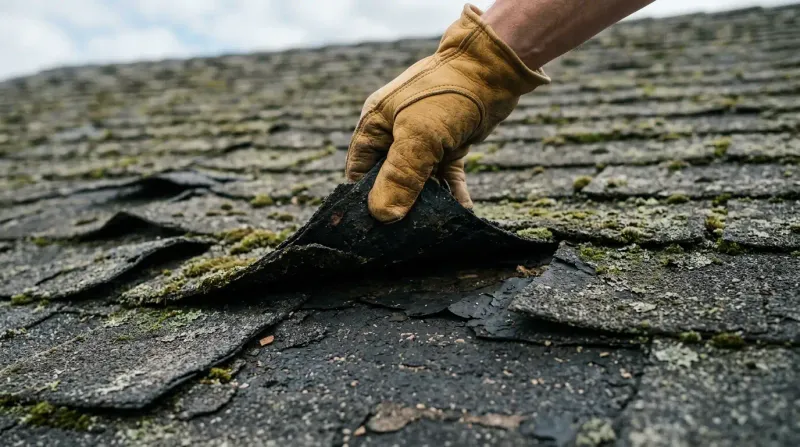
Moss on roof surfaces does more than just affect your home’s appearance. This fuzzy green plant:
- Traps moisture against your roof
- Lifts shingles as it grows
- Creates avenues for water penetration
- Accelerates shingle decomposition
Moss on roof areas typically develops in shaded sections that receive less sunlight. Northern exposures and areas shaded by trees are particularly vulnerable. If left untreated, moss can reduce your roof’s lifespan by years.
Those Mysterious Dark Streaks
Black streaks on roof surfaces are usually caused by a type of algae called Gloeocapsa Magma. While not immediately damaging like moss, these black streaks on the roof shingles indicate:
- High moisture retention
- Potential degradation of shingle material
- Areas where more serious growth may eventually develop
These streaks are most common in humid climates and on north-facing roof slopes. While cleaning may temporarily remove the discoloration, older roofs with persistent biological growth often benefit more from replacement with algae-resistant shingles than from repeated cleaning.
Sign #6: Storm Damage Has Compromised Your Roof
Severe weather events can significantly shorten your roof’s lifespan, sometimes necessitating immediate replacement.
Recognizing Hail Damage
Signs of hail roof damage in Cumming, GA, may not be immediately obvious to untrained eyes. Professional roofers look for:
- Random damage patterns with no directionality
- Small, dark spots where granules have been knocked away
- Soft spots that feel like bruises when pressed gently
- Shiny asphalt where hail has exposed the underlying material
The frequency of hailstorms in Georgia makes understanding the signs of hail roof damage in Cumming, GA, particularly important for local homeowners. Even relatively small hail (3/4 inch) can cause significant damage when driven by strong winds.
If your home has experienced significant hail damage, a professionalhail-damage roof repair assessment is crucial, as insurance typically covers replacement only within a limited timeframe after the damage occurs.
Sign #7: Your Roof Is Sagging or Drooping
A sagging roofline is perhaps the most serious warning sign on this list, as it indicates potential structural compromise that could lead to catastrophic failure.
Causes of Roof Sagging
Sagging typically results from:
- Long-term water damage to structural supports
- Excessive weight (multiple layers of shingles, snow accumulation)
- Improper installation or inadequate materials
- Foundation settlement affecting the roof structure
How do you know when you need a new roof immediately versus scheduling a replacement in the coming months? A sagging roof is your answer. This serious structural issue requires prompt professional evaluation and typically necessitates complete replacement rather than repair.
If you notice even slight dips or waviness in your roofline, especially at the lowest points, this is how you know you need a new roof without delay. Addressing this issue quickly can prevent potential collapse and more extensive structural damage to your home.
What To Do Next: Taking Action
Once you’ve identified signs of roof deterioration, taking the proper next steps ensures you’ll make informed decisions about repair or replacement.
Schedule a Professional Inspection
Before making any decisions, have a qualified roofing contractor perform a thorough inspection. Professional roofers can:
- Safely access all areas of your roof
- Identify hidden damage
- Assess the remaining lifespan of your current roof
- Provide documentation needed for insurance claims
- Recommend appropriate solutions based on your specific situation
Understanding Your Replacement Options
Things to consider when replacing a roof include:
- Material selection (traditional asphalt shingles vs. metal roofing)
- Removal vs. overlay (removing old shingles or laying metal roofing over existing materials)
- Structural modifications needed (like metal purlins)
- Warranty options
- Energy efficiency improvements
- Budget constraints and financing options
Things to consider when replacing a roof also include timing. While emergency replacements sometimes can’t be avoided, planned replacements typically cost less and allow more time for research and preparation.
When evaluating materials, consider longer-lasting options like architectural shingles or metal roofing that may cost more initially but offer better long-term value through extended lifespans and improved energy efficiency.
Prepare for Replacement with Brandon J Roofing
Your roof is your home’s first line of defense against the elements, and recognizing when you need a new roof is crucial to protecting your investment. The best approach is to have regular professional inspections, particularly after severe weather events or when your roof approaches its expected lifespan. Being proactive about roof maintenance and replacement can save you from costly emergency repairs down the line.
Brandon J Roofing brings expert knowledge and years of experience in the roofing industry to every project. Our team specializes in thorough inspections, quality installations, and roofing shingle repair that stands the test of time. Don’t wait until small problems become major emergencies—recognize these warning signs and take action to protect your home and family.