Maximize Your Payout: 7 Steps to Filing a Roof Damage Insurance Claim
When severe weather strikes, your roof often takes the hardest hit, leaving you with damage that requires immediate attention. The process of filing a claim for roof damage can feel overwhelming—navigating insurance policies, meeting with adjusters, and finding the right contractor while your home remains vulnerable. Many homeowners struggle with documentation requirements, understanding policy language, and getting fair compensation for their damaged roof.
This guide walks you through the critical steps to maximize your insurance payout and properly restore your roof. You’ll learn exactly what to do immediately after discovering damage, how to navigate the claims process, and what pitfalls to avoid. By following these seven steps, you’ll be better equipped to handle this stressful situation and secure the funds you need for proper repairs.
1. Take Immediate Action After Discovering Roof Damage
Prioritize Safety First
When you discover roof damage, safety should be your primary concern. Stay out of areas with sagging ceilings or water accumulation, as these may indicate structural compromise. Turn off electricity to affected areas if water is coming through electrical fixtures.
Document Everything
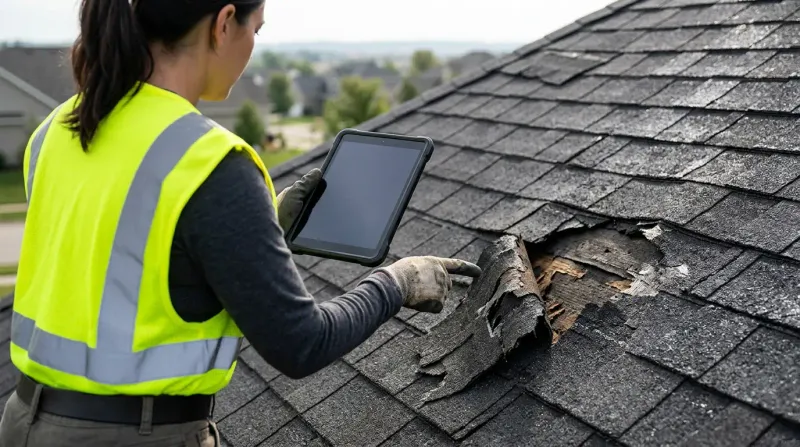
Before making any temporary repairs, thoroughly document all visible damage:
- Take clear photos and videos from multiple angles
- Capture wide shots of the entire roof and close-ups of specific damage
- Document interior damage, including water stains or leaks
- Use a ruler or tape measure in photos to show the size of the damage
Make Temporary Repairs Only
To prevent further damage (which insurance might not cover), make reasonable temporary repairs:
- Cover holes with tarps securely fastened down
- Place buckets under active leaks
- Remove valuable items from areas at risk of water damage
Keep all receipts for emergency repairs, as these costs are often reimbursable when filing a claim for roof damage.
2. Understand Your Insurance Coverage
Review Your Policy Before Filing
Before calling your insurance company, review your policy to understand what’s covered. Most homeowner policies cover damage from unpreventable events, such as storms, but not from neglect or normal wear and tear. If you’re in an aging home, you may discover you can’t get homeowners’ insurance because of the roof condition without updates.
Does Homeowners Insurance Cover Roof Leaks?
Does homeowners’ insurance cover roof leaks? The answer depends on the cause. Insurance typically covers sudden, accidental leaks from covered perils like storm damage. However, leaks from poor maintenance or gradual wear aren’t usually covered. If leaks result from hail or wind damage, you’re more likely to be covered than if they stem from an aging roof.
Check Your Deductible and Coverage Limits
Understand your deductible amount before proceeding. Some policies have separate deductibles for wind and hail damage or percentage-based deductibles for hurricane damage. Also, confirm whether you have Actual Cash Value (ACV) or Replacement Cost Value (RCV) coverage, as this significantly affects your payout.
3. File Your Claim Properly
Contact Your Insurance Company Promptly
Most policies require prompt notification of damage. Call your insurance company’s claims department immediately—many have 24/7 claim reporting lines. Filing a claim for roof damage quickly shows you’ve acted responsibly and helps prevent denial based on delayed reporting.
What Information You’ll Need
Be prepared with:
- Your policy number
- Date and time of damage
- Description of damage
- Temporary repairs you’ve made
- Photos and videos of damage
Avoid Common Filing Mistakes
Don’t:
- Accept the first offer without review
- Sign anything from contractors or insurance representatives without understanding it
- Start major repairs before the adjuster’s inspection
- Dispose of damaged materials until the adjuster has seen them
4. Work Effectively With Your Insurance Adjuster
Prepare For The Inspection
When the adjuster schedules their visit:
- Gather all documentation of damage
- Make a detailed list of all damaged items
- Have copies of any expense receipts ready
- Ensure the adjuster can access all damaged areas safely
Have Your Contractor Present
Having a professional roofer present during the adjuster’s inspection can be invaluable. They can point out damage the adjuster might miss and provide an expert perspective. Many reputable roofing companies offer free hail damage roof repair assessments specifically for insurance claims.
Document The Inspection
Take notes during the adjuster’s visit and ask questions about their findings. Request a copy of their report and compare it with your documentation and the contractor’s assessment.
5. Understand Your Insurance Estimate
ACV vs. RCV: A Critical Difference
Actual Cash Value (ACV) factors in depreciation, meaning you’ll receive payment for what your roof was worth at the time of damage—not what replacement costs. Replacement Cost Value (RCV) covers the full replacement cost, though it is usually paid in two installments: the ACV first, then the remainder after repairs are completed.
Reading Your Settlement Letter
Your settlement letter will detail covered damages and excluded items. Review this carefully with your contractor to ensure all damage is accounted for. If your area has experienced widespread damage from a major storm, insurance companies sometimes miss items due to high claim volumes.
When To Request Supplements
If the adjuster’s estimate doesn’t cover all necessary repairs, you can request a “supplement.” This is common when additional damage is discovered during repairs or when material costs increase. Does homeowners’ insurance cover roof leaks that are discovered after the initial assessment? With proper documentation, supplemental claims can address these issues.
6. Select The Right Roofing Contractor
Importance of Local, Reputable Experts
Choose a contractor who:
- Is locally based with a physical address
- Has experience with insurance claims
- Provides detailed written estimates
- Is properly licensed and insured
- Has positive reviews and references
A quality contractor will help ensure your roof replacement is done correctly and may even assist with communicating technical details to your insurance company.
Red Flags To Watch For
Avoid contractors who:
- Require large upfront payments
- Pressure you to sign contracts immediately
- Offer to “absorb” or “eat” your deductible (which is insurance fraud)
- Have no local presence or references
Getting Multiple Estimates
Even if not required by your insurance, getting multiple estimates ensures you’re receiving fair pricing and comprehensive service. Compare not just prices but also materials, warranties, and timeframes.
7. Handle Denials or Coverage Issues
Why Claims Get Denied
Common denial reasons include:
- Pre-existing damage
- Normal wear and tear
- Missed filing deadlines
- Policy exclusions
- Insufficient documentation
The Appeal Process
If your claim is denied, you have the right to appeal:
- Request the denial in writing with specific reasons
- Gather additional documentation or expert opinions
- File a formal appeal following your insurer’s procedure
- Consider hiring a public adjuster for complex disputes
Alternative Financing Options
When insurance doesn’t cover your needs, alternatives exist. Roofing loans for bad credit are available through many roofing companies that partner with financing institutions specializing in home improvement loans. These often have more flexible approval criteria than traditional banks.
Insurance Challenges With Damaged Roofs
Homeowners sometimes discover they can’t get homeowners’ insurance because of the roof’s age or condition. In these cases, making repairs may be necessary before new coverage can be secured. Some insurance companies offer conditional coverage pending repairs within a specified timeframe.
Brandon J Roofing: Make Repairs and Claims Easier
Navigating the insurance claim process for roof damage doesn’t have to be overwhelming. With proper documentation, understanding of your coverage, and assistance from qualified professionals, you can maximize your payout and restore your home properly. If you’re concerned about financing, remember that roofing loans for bad credit are increasingly accessible options for homeowners facing emergency repairs.
Our experience working with insurance companies allows us to advocate for proper repairs and ensure you receive the coverage you’re entitled to. We understand the stress and uncertainty that come with roof damage, and our team is committed to restoring not just your roof but your peace of mind through professional siding installationand roof repair.