Maximize Asphalt Roof Lifespan: 7 Key Factors & When to Replace Shingles
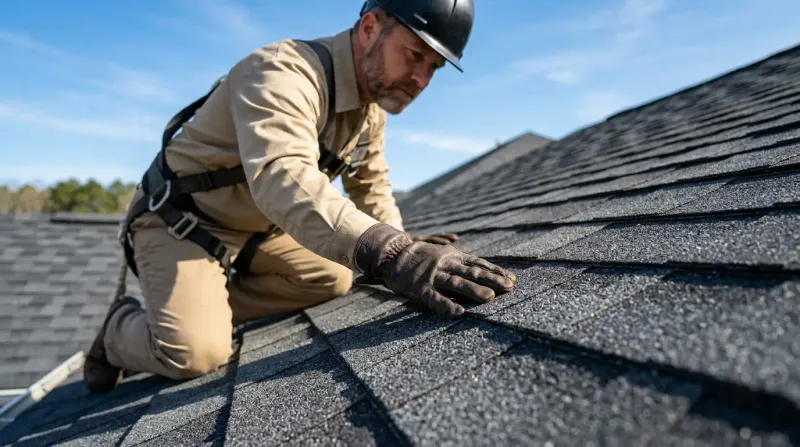
Your asphalt roof silently protects your home every day, but its ability to withstand the elements can vary dramatically over the years. After two decades, many homeowners face unexpected roof failures and costly replacements because they overlook crucial factors affecting their roof’s durability. Understanding what affects your asphalt roof’s lifespan can save you thousands in avoidable expenses and significantly extend your roof’s service life.
In this comprehensive guide, you’ll discover the seven critical factors that determine how long your asphalt shingles will last. We’ll also cover the unmistakable signs that indicate it’s time for a replacement and provide clarity on replacement costs. Let’s take a look!
Understanding Asphalt Shingle Roofing Types
What Makes Up Your Asphalt Roof
Asphalt shingles dominate residential roofing because they balance affordability, appearance options, and performance. Most asphalt shingles consist of a fiberglass mat coated with asphalt and mineral granules that provide color, UV protection, and fire resistance.
The typical asphalt roof lifespan ranges from 15 to 30+ years, depending on several factors. Basic three-tab shingles generally last 15-20 years, while architectural (dimensional) shingles extend to 25-30 years. Premium options, including those marketed as “lifetime” or “50-year” shingles, can last even longer under proper conditions.
7 Key Factors That Determine Your Roof’s Lifespan
1. Shingle Quality and Material Selection
The quality of your roofing material forms the foundation of your roof’s longevity. Basic three-tab shingles offer economy but have the shortest lifespan. Architectural shingles, with their multi-dimensional appearance and thicker construction, typically add 5-10 years of service life.
Premium options like 50-year shingles provide maximum protection for asphalt roofing. While the price is higher upfront, their extended protection often delivers better long-term value. The cost of 50 year shingles reflects their enhanced wind resistance, superior impact ratings, and advanced UV protection technologies designed to combat environmental stressors.
2. Professional Installation Quality
Even top-grade shingles fail prematurely if not installed correctly. Professional installation ensures:
- Proper nail placement and quantity
- Correct shingle alignment and overlap
- Appropriate flashing around roof penetrations
- Adequate underlayment application
- Adherence to manufacturer specifications
- Check a metal gauge chart in case you need it
Poor installation can reduce your asphalt roof’s lifespan by 20-40%, making your choice of contractor perhaps the most consequential decision in the roofing process. Always select experienced, certified professionals with proven track records.
3. Ventilation System Effectiveness
Proper roof and attic ventilation remains critically important for shingle longevity yet is often overlooked. Inadequate ventilation creates extreme temperature conditions that accelerate shingle deterioration:
- In summer: Excessive heat buildup causes shingles to bake from below, making them brittle
- In winter: Warm, moist air condenses in cold attics, leading to moisture damage and potential rot
A balanced ventilation system with intake vents at the eaves and exhaust vents near the ridge allows continuous airflow that moderates temperatures and moisture levels, potentially adding years to your roof’s service life.
4. Local Climate Conditions
Your local climate significantly impacts how long your asphalt shingles last. Areas with extreme temperature fluctuations, high UV exposure, frequent storms, or heavy precipitation place greater stress on roofing materials.
Heat and humidity accelerate aging by causing shingles to expand, contract, and potentially warp. Strong UV radiation breaks down the oils in asphalt, making shingles brittle. Frequent storms create risks from wind uplift, hail impact, and debris damage. Homes in harsh climate zones should consider impact-resistant or high-wind-rated shingles that withstand these environmental challenges and maintain a longer asphalt roof lifespan.
5. Regular Maintenance Practices
Consistent roof maintenance can add years to your shingle lifespan. A proactive maintenance program should include:
- Annual professional inspections
- Promptroof repair of minor issues
- Regular gutter cleaning
- Removal of debris from roof surfaces
- Trimming overhanging tree branches
- Checking and resealing flashing as needed
Small investments in maintenance prevent major issues that would otherwise require complete replacement. Most roofing professionals recommend scheduling inspections at least annually and after severe weather events.
6. Roof Slope and Design Complexity
Your roof’s design and pitch affect how quickly water and debris clear from the surface. Steeper slopes shed water more efficiently, while low-slope roofs allow water to linger and potentially infiltrate under shingles.
Complex roof designs with multiple valleys, dormers, and penetrations create additional vulnerability points where leaks can develop. These architectural features require special attention during installation and maintenance.
Simple roof designs with steeper pitches typically have a longer asphalt roof lifespan than complex, low-slope configurations. When replacing your roof, consider how your roof’s design might affect its performance.
7. Shingle Color Selection
Shingle color affects more than just curb appeal—it impacts temperature absorption and energy efficiency. Darker colors absorb more heat, which can raise attic temperatures and accelerate shingle aging, particularly in hot, sunny climates.
Lighter-colored shingles reflect more solar radiation and can stay 20-40°F cooler than dark shingles under identical conditions. This temperature difference significantly impacts deterioration rates and energy costs.
When selecting new shingles, consider using aroof shingle visualizer to see different colors on your home, and weigh the thermal impact of your color choice based on your local climate.
Signs Your Asphalt Shingles Need Replacement
Knowing when to replace your roof helps you avoid costly water damage and interior repairs. Watch for these clear indicators that your roof has reached the end of its useful life:
Visible Shingle Deterioration
- Curling and cupping: Edges of shingles curling upward or middle sections cupping downward indicate advanced age and heat damage
- Cracked or broken shingles: Widespread cracking signals brittleness from UV exposure and aging
- Bald spots and granule loss: Heavy granule loss exposes the asphalt mat to accelerated deterioration
- Moss or algae growth: While often an aesthetic issue, extensive growth can trap moisture and damage shingles
Functional Failure Signs
- Leaks or water stains: Water penetration in your attic or ceiling indicates compromised waterproofing
- Sagging roof deck: A drooping roofline suggests structural issues, potentially from water damage
- Daylight visible through roof boards: Light coming through your attic indicates gaps in your roof system
- Increased energy bills: A sudden rise in heating or cooling costs may indicate compromised roof insulation or ventilation
Most asphalt shingle roofs approaching 20 years should be evaluated for replacement, even without obvious damage. At this age, protective capabilities begin to diminish significantly, even if the roof appears intact from ground level.
Understanding the Costs of Shingle Replacement
Roof replacement represents a significant investment in your home’s protection and value. Several factors influence the cost of replacing shingles on roof systems:
Material Quality and Price Points
Shingle prices vary widely based on quality and warranty periods:
- Basic three-tab shingles: $1-$2 per square foot ($100-$200 per square*)
- Architectural shingles: $1.50-$3.50 per square foot ($150-$350 per square)
- Premium or 50-year shingles: $3-$6+ per square foot ($300-$600+ per square)
*Note: A “square” in roofing equals 100 square feet of roof surface
The cost of 50-year shingles is considerably higher than basic options, but they provide enhanced protection and potentially better long-term value. These premium products often include additional features like algae resistance, enhanced wind warranties, and superior impact protection.
Installation and Labor Considerations
Installation typically accounts for 60-70% of your total roofing project cost. The cost of replacing shingles on roof systems varies based on:
- Roof complexity and accessibility
- Removal of existing materials
- Necessary repairs to the decking or structure
- Regional labor rates
- Seasonality and contractor demand
A complete roof replacement involves more than just installing new shingles. Proper installation includes new underlayment, flashing, ventilation components, and possibly decking repairs.
Additional Cost Factors
When budgeting for roof replacement, consider these additional elements that affect how much roofing shingles cost per square:
- Disposal fees for old materials
- Permits and inspection fees
- Structural repairs if damage is discovered
- Ventilation improvements
- Enhanced underlayment options like platinum underlayment
- Extended warranty coverage
On average, homeowners can expect to pay between $3.50 and $5.50 per square foot for a complete asphalt shingle roof replacement with mid-grade materials. This translates to approximately $10,500-$16,500 for a typical 3,000-square-foot roof.
Value Considerations
While cost matters, value should be your primary consideration. Higher-quality materials and proper installation may cost more initially but offer better protection and longer service life. When comparing quotes, consider:
- Warranty terms and coverage
- Contractor reputation and experience
- Material quality and ratings
- Energy efficiency benefits
- Potential insurance premium discounts
Making the Right Decision for Your Roof
Repair vs. Replace Considerations
Sometimes a full replacement isn’t necessary. Consider these guidelines:
- If your roof is under 15 years old with minor damage confined to a small area, repairs are often sufficient
- For roofs approaching 20 years with widespread issues, replacement typically offers better value than extensive repairs
- When damage affects more than 30% of your roof surface, replacement is usually more cost-effective long-term
Consulting with a roofing professional helps determine the most appropriate solution based on your roof’s current condition and age.
Choosing the Right Roofing Partner
The contractor you select significantly impacts the quality and longevity of your roof. Look for companies that:
- Are locally established with a physical address
- Hold proper licensing and insurance
- Offer solid workmanship warranties
- Have positive references and reviews
- Are certified by major shingle manufacturers
- Provide detailed written estimates
- Have experience with your specific roofing type
Professional installation directly correlates with asphalt roof lifespan, making contractor selection as important as material choice.
Keep Your Roof in Top Shape with Our Help
Your asphalt shingle roof represents one of your home’s most critical protective systems, defending against weather extremes and preserving structural integrity. By understanding the seven key factors that influence asphalt roof lifespan and recognizing replacement indicators, you’re better equipped to make informed decisions about this significant home investment.
Brandon J Roofing is a leading authority in siding installation, roof maintenance and replacement, delivering professional expertise and quality craftsmanship on every project. Our experienced team understands how local climate conditions affect your roof’s performance and can recommend ideal solutions for your specific situation. Whether you’re considering architectural shingles or evaluating the premium options for maximum longevity, we are the ones to call.